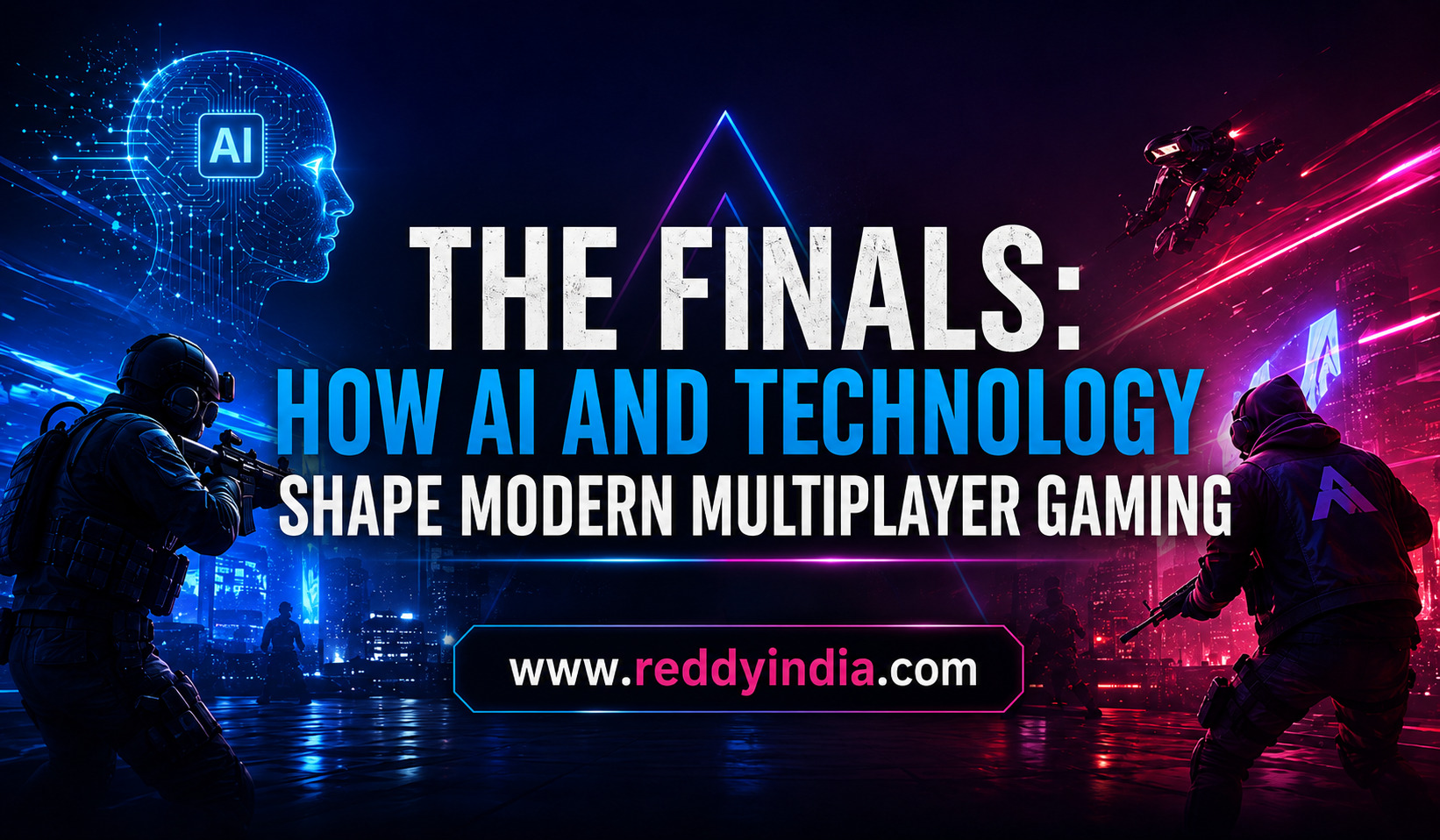
The Finals: How AI and Technology Shape Modern Multiplayer Gaming
Modern multiplayer gaming is no longer defined only by fast internet connections, powerful graphics, and competitive matchmaking. Technology now influences almost every part of the experience, from physics and sound design to matchmaking, anti-cheat systems, game development, and live content.
The Finals is a strong example of this technological direction. Developed by Embark Studios, the competitive shooter stands out for its highly destructible environments, fast-paced matches, team-based objectives, and dynamic arenas. These features demonstrate how modern technology can make multiplayer games feel more unpredictable and interactive.
Artificial intelligence is also becoming increasingly important across the gaming industry. While players may immediately associate AI with bots or computer-controlled opponents, its potential is much broader. AI can assist developers, analyze gameplay, improve moderation, support anti-cheat systems, and help create more responsive game experiences.
The combination of AI and other technologies could shape where multiplayer gaming goes next.
Why Technology Matters in The Finals
The Finals is built around the idea of competition inside highly interactive environments. Players do not simply run through static maps. Buildings can be damaged, structures can collapse, and teams can use the environment as part of their strategy.
This creates a different type of multiplayer experience.
In a traditional shooter, players may memorize maps and learn fixed routes. In a destructible environment, those strategies can change when walls disappear, floors collapse, or defensive positions are destroyed.
Technology makes this possible.
Advanced physics systems, networking, rendering, animation, and server-side processing all have to work together to maintain a responsive experience while players and environments are constantly changing.
Destruction Makes Multiplayer More Dynamic
Destruction is one of the most recognizable features of The Finals.
Players can destroy parts of buildings and use environmental changes to their advantage. A defensive position that seems safe at the beginning of a match might disappear moments later.
This creates an important difference between static and dynamic maps.
Players must constantly adapt to their surroundings instead of relying entirely on memorized strategies.
From a technology perspective, this is challenging because the game has to synchronize environmental changes between multiple players.
Every participant needs to see the game state consistently, even when structures are being damaged or destroyed.
AI Could Improve Gameplay Analysis
Artificial intelligence could help multiplayer games understand player behavior at a deeper level.
In a competitive game like The Finals, enormous amounts of gameplay data can potentially be collected. This may include movement patterns, match outcomes, weapon usage, objective participation, and other gameplay statistics.
AI systems could analyze these patterns to identify trends.
For developers, this could help reveal which weapons are too strong, which strategies are becoming dominant, or which areas of a map are rarely used.
For players, AI-driven analysis could eventually provide more personalized information about their performance.
Instead of only looking at a win-loss record, players could understand where they are succeeding and where they repeatedly make mistakes.
AI Could Support Better Matchmaking
Matchmaking is one of the most important parts of multiplayer gaming.
A match that is too easy can become boring, while a match against significantly stronger opponents can be frustrating.
Traditional matchmaking systems use player ratings and other measurements to create balanced games. AI could potentially make these systems more sophisticated.
Instead of considering only a player’s overall performance, future systems could analyze different aspects of gameplay.
For example, two players might have similar win rates but completely different play styles and skill profiles.
AI could potentially identify these differences and improve how players are grouped together.
The goal would be more competitive matches where teams have a reasonable chance of winning.
AI Could Help Detect Cheating
Competitive games constantly face the challenge of cheating.
Traditional anti-cheat systems look for known cheats, suspicious software, or unusual behavior. AI could add another layer by identifying gameplay patterns that appear inconsistent with normal human behavior.
An AI system could potentially analyze large amounts of match data and identify unusual aiming, movement, or interaction patterns.
This does not mean every unusual player should automatically be considered a cheater. Human review and multiple verification methods would remain important.
However, AI could help identify suspicious behavior more quickly and allow developers to investigate potential problems.
A strong anti-cheat system is particularly important for competitive games because cheating can damage player trust.
AI Could Improve Game Development
AI is also changing how games are made.
Developers can use AI-assisted tools for coding, testing, debugging, concept development, data analysis, and other production tasks.
For a multiplayer game that receives regular updates, these tools could help teams manage large amounts of information.
AI could analyze crash reports, identify recurring technical issues, or help developers test different gameplay scenarios.
This could allow human developers to spend more time on creative decisions and less time on repetitive work.
However, AI-generated material still needs human oversight. Game development involves artistic direction and complex design decisions that cannot simply be automated.
AI and Destructible Environments
The combination of AI and destruction could become especially interesting.
Imagine an AI-controlled character operating inside a destructible arena. Instead of following a fixed route, it could understand how the environment is changing and adjust its behavior.
If a wall disappears, the AI could search for another defensive position.
If a bridge collapses, it could find an alternative route.
If a team repeatedly uses the same strategy, an AI opponent could potentially adapt.
This type of behavior could make future multiplayer environments feel more dynamic.
The challenge is ensuring that AI remains fair. Players should be able to understand why an opponent behaved a certain way rather than feeling like the system is secretly giving the AI unfair advantages.
Technology Could Improve Sound and Spatial Awareness
Audio technology is another important part of competitive multiplayer games.
In The Finals, sound can provide valuable information about what is happening around the player.
Footsteps, explosions, structural damage, gunfire, and environmental effects can influence decisions.
Future AI-powered audio systems could potentially make sound environments more responsive.
For example, sound could adapt dynamically based on environmental destruction, distance, obstacles, or changes in the surrounding structure.
Better spatial audio could make it easier for players to understand where events are happening without relying entirely on visual information.
AI Could Support Dynamic Game Events
Live multiplayer games need fresh content to keep players interested.
AI could potentially help developers create variations in events, challenges, and environmental situations.
Instead of repeating identical scenarios, future systems could adjust certain elements based on player behavior or match conditions.
For example, a match could contain different environmental challenges depending on how teams are playing.
This does not mean AI would need to generate an entire game automatically. Even small dynamic changes could make matches feel less repetitive.
AI Could Improve Player Support
Artificial intelligence could also help players outside actual matches.
Gaming platforms increasingly use automated systems to answer questions, explain mechanics, troubleshoot problems, and guide users through features.
For a complex multiplayer game, AI assistants could potentially help players understand weapons, game modes, settings, or basic strategies.
However, these systems should provide reliable information rather than confidently giving incorrect advice.
The Importance of Human Creativity
Although AI is becoming more powerful, technology alone does not create a great multiplayer game.
The Finals demonstrates how a strong gameplay concept can be combined with advanced technology to create something distinctive.
Destruction, movement, team objectives, weapons, maps, sound, and visual design all need to work together.
AI can assist with certain processes, but developers still decide what the game should feel like.
Human creativity remains essential for designing memorable experiences.
Challenges of AI in Multiplayer Gaming
AI also creates several challenges.
Privacy is one concern because advanced systems may rely on large amounts of player data.
There is also the possibility of false positives in anti-cheat systems or matchmaking algorithms.
AI-generated content can sometimes contain mistakes or behave unexpectedly.
Another concern is over-automation. If every part of a game becomes optimized by algorithms, multiplayer experiences could lose some of the unpredictability and creative identity that players enjoy.
Developers need to find a balance between technological efficiency and human-designed gameplay.
The Future of AI-Powered Multiplayer Games
The future of multiplayer gaming could involve AI working quietly behind the scenes rather than constantly appearing as an obvious feature.
Players may not notice AI improving matchmaking, analyzing server performance, detecting suspicious behavior, balancing gameplay, or helping developers test new features.
At the same time, more visible applications could eventually include adaptive NPCs, personalized training, dynamic events, and intelligent companions.
Games such as The Finals show why technology is becoming increasingly important to multiplayer design. As hardware, networking, physics engines, and AI systems improve, developers can create experiences that respond more naturally to player actions.
Conclusion
The Finals represents the direction in which modern multiplayer gaming is moving: toward more dynamic environments, deeper technology, and highly responsive gameplay.
AI could strengthen this evolution by helping with matchmaking, anti-cheat systems, gameplay analysis, development, player support, and future adaptive experiences.
The most successful use of AI will likely be the kind that improves the game without distracting from what players actually enjoy.
For multiplayer gaming, the future is not simply about making computers smarter. It is about using technology to create worlds where players can compete, experiment, adapt, and experience something different every time they enter a match.
As AI and game technology continue to develop, competitive titles could become more responsive, more personalized, and more dynamic than ever before.