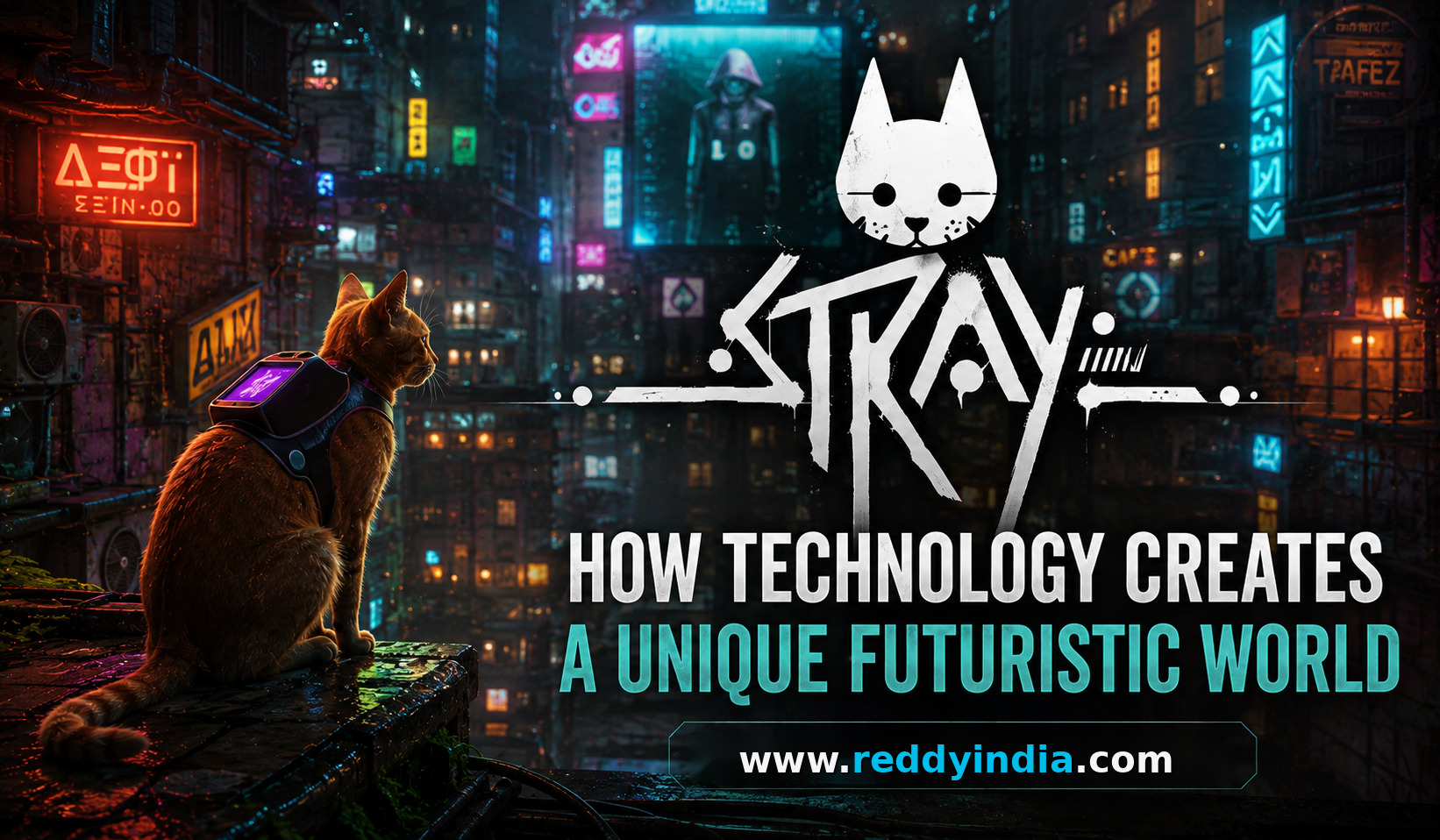
Stray: How Technology Creates a Unique Futuristic World
Stray is a game that combines exploration, storytelling, technology, and atmosphere in a way that feels different from many other adventure titles. Developed by BlueTwelve Studio and published by Annapurna Interactive, the game places players in the role of a stray cat exploring a mysterious futuristic city.
Instead of presenting the future through enormous spaceships or traditional science-fiction battles, Stray creates its world through abandoned buildings, neon lights, robots, digital systems, underground communities, and forgotten infrastructure.
Technology is everywhere in this world, but it is not always presented as something new and exciting. Much of it is old, damaged, abandoned, or repurposed. This contrast gives Stray its distinctive atmosphere and helps tell a story about civilization, artificial life, and survival.
A Futuristic World Without Humans
One of the most interesting aspects of Stray is that humans are largely absent from the world the player explores.
Their absence creates an unusual futuristic setting.
Instead of meeting humans who explain how society changed, players discover clues through the environment. Buildings, signs, computers, laboratories, apartments, machines, and old messages provide pieces of information about what happened.
This environmental storytelling makes technology an important part of the game’s narrative.
The player learns about the city’s past by exploring what remains behind.
Technology Is Part of the Environment
In many science-fiction games, advanced technology is presented as something spectacular.
Stray takes a different approach.
Technology is integrated into everyday spaces.
Players encounter computers, surveillance systems, elevators, communication devices, automated doors, machinery, and robotic characters while moving through the city.
These objects help create the impression that the environment was once a functioning civilization.
Now, many systems continue operating long after the people who created them are gone.
That idea makes the city feel both futuristic and abandoned.
Robots Have Replaced Human Society
Robots are central to Stray’s world.
They are not simply enemies or background characters. They form communities, develop relationships, perform jobs, communicate with each other, and create their own identities.
This creates an interesting question about technology and society.
If humans disappear but their machines continue operating, can those machines eventually create a society of their own?
Stray does not answer this question through long philosophical explanations. Instead, players see the answer through the lives of the robotic characters they encounter.
They have homes, friendships, fears, responsibilities, and dreams.
This makes the game’s technology feel surprisingly human.
B-12 and the Human-Machine Connection
One of the most important technological characters in Stray is B-12.
B-12 is a small drone that accompanies the cat throughout the adventure.
The drone provides translation, communication, assistance, and access to different systems within the city.
However, B-12 is more than a gameplay tool.
The character represents one of the game’s central ideas: the relationship between technology and human identity.
As the story develops, players learn more about B-12’s origins and connection to humanity.
This gives emotional meaning to what initially appears to be a simple robotic companion.
Artificial Intelligence Has an Emotional Role
Stray presents artificial intelligence differently from many futuristic games.
Its robotic characters are capable of behavior that appears emotional and personal.
They can show fear, loneliness, curiosity, affection, frustration, and hope.
The game does not spend all its time explaining the technical process behind these characteristics.
Instead, it asks players to accept the robots as individuals and consider what makes someone feel alive.
This is especially effective because the player controls a biological animal while interacting with artificial beings.
The contrast between the natural world and artificial world becomes one of the game’s strongest themes.
The Cat Changes How Players Experience Technology
The decision to make a cat the protagonist is more important than it might initially seem.
A human character would probably interact with technology in familiar ways. A cat experiences the city differently.
The player climbs across rooftops, jumps between buildings, squeezes through narrow spaces, knocks objects from shelves, and explores places from unusual perspectives.
Technology therefore becomes part of the environment rather than simply a collection of interfaces.
A broken computer may be something a human character would examine immediately. A cat may simply walk across it.
This creates a different relationship with the futuristic setting.
Neon Lights Create the Cyberpunk Atmosphere
Stray’s visual identity is strongly connected to neon lighting.
Bright signs contrast with dark streets, aging buildings, narrow alleys, and industrial structures.
The result is a world that feels futuristic but worn down.
Technology is not presented as clean and perfect.
Instead, it is surrounded by decay.
Electrical cables cover buildings. Machines appear damaged. Signs flicker. Old systems continue operating despite years of neglect.
This visual combination makes the city feel like a place that has survived a major collapse.
Technology and Environmental Storytelling
One of Stray’s strongest storytelling techniques is the use of environmental details.
Players can discover information by looking around rather than simply following dialogue.
A computer terminal may reveal something about the past. A damaged building can suggest how people lived. A robotic neighborhood can show how society changed.
The environment becomes a kind of historical record.
This approach works especially well for a game focused on a lost civilization.
The player is not given the entire story at once.
Instead, technology provides clues.
The City Shows the Cost of Isolation
The futuristic city in Stray is technologically advanced but emotionally isolated.
Robots live within enclosed communities, and many areas are separated from one another.
This creates an interesting contrast.
Technology has allowed the city’s inhabitants to survive, communicate, and maintain infrastructure, but it has not eliminated loneliness.
Characters still want companionship.
They still miss people.
They still dream about places they cannot reach.
The game therefore suggests that technological advancement does not automatically solve emotional or social problems.
Machines Continue Working After Civilization Changes
Another important theme is technological persistence.
Machines can continue operating long after the people who built them are gone.
This is a powerful idea because modern society already depends heavily on infrastructure that most people rarely think about.
Power systems, communication networks, data centers, transportation systems, and automated services can operate continuously.
Stray takes this concept into a fictional future where technological systems have become part of the foundation of a new society.
The result is a world that feels believable despite being highly imaginative.
Technology Helps Create Exploration
Technology is also directly connected to gameplay.
Players use different systems throughout the city to progress.
Doors, elevators, computers, electrical systems, transportation mechanisms, and communication devices become part of the exploration experience.
These interactions make the world feel functional.
Instead of technology existing only for visual decoration, it helps determine how players move through the environment.
This connection between world-building and gameplay is one reason Stray’s setting feels so cohesive.
The Contrast Between Nature and Technology
The cat itself represents nature in a world dominated by machines.
This contrast appears repeatedly.
The player explores industrial environments while controlling an animal that behaves naturally.
The cat climbs, sleeps, observes, and interacts with the environment without understanding the technological history surrounding it.
This makes the player’s perspective unusual.
The cat does not need to understand every machine for the player to appreciate the world.
Its simple goal of finding a way home provides a human-scale story inside a technologically complex environment.
What Stray Says About the Future
Stray does not present technology as entirely good or bad.
Instead, it shows technology as something that can outlive the civilization that created it.
Machines can preserve memories, maintain communities, and provide companionship.
At the same time, technology can become part of systems that isolate people and separate communities.
This balanced approach makes the world more interesting.
The game is less concerned with predicting specific technologies and more interested in asking what happens to technology after society changes.
Could Future Games Use Technology in Similar Ways?
Stray demonstrates that futuristic technology does not need to dominate the gameplay to make a world feel advanced.
Developers can use environmental design, artificial characters, lighting, sound, and interactive systems to communicate technological ideas.
Future games could take this approach even further.
AI-powered NPCs could remember player interactions. Environments could change dynamically. Machines could respond to player behavior. Digital characters could develop more complex relationships.
However, the strongest technological worlds will still need good storytelling.
Technology should support the experience rather than exist simply because it looks futuristic.
Why Stray’s World Feels Different
Many futuristic games focus on powerful characters, advanced weapons, giant corporations, or massive conflicts.
Stray takes a quieter approach.
Its futuristic world is experienced from street level.
Players see old apartments, narrow alleys, forgotten machines, robotic communities, and small signs of a civilization that disappeared.
The scale feels personal.
That is what makes the technology memorable.
Players are not simply told that the world is technologically advanced. They can see the evidence everywhere they go.
Conclusion
Stray shows how technology can create a futuristic world without relying entirely on traditional science-fiction ideas.
Its abandoned city, robotic inhabitants, artificial intelligence, neon environments, and forgotten infrastructure combine to create a setting that feels mysterious and believable.
The game also explores deeper ideas about technology, identity, loneliness, memory, and the relationship between artificial and biological life.
B-12 demonstrates how a technological companion can become an emotional part of a story, while the robotic communities show how machines might develop their own social structures.
Ultimately, Stray’s greatest technological achievement is not any individual gadget or futuristic system. It is the way technology is woven into the environment so naturally that the city itself becomes part of the story.
The result is a futuristic world where machines preserve the traces of a lost civilization while a small cat explores what remains.