Stellaris: How AI Empires Make Galactic Strategy More Dynamic
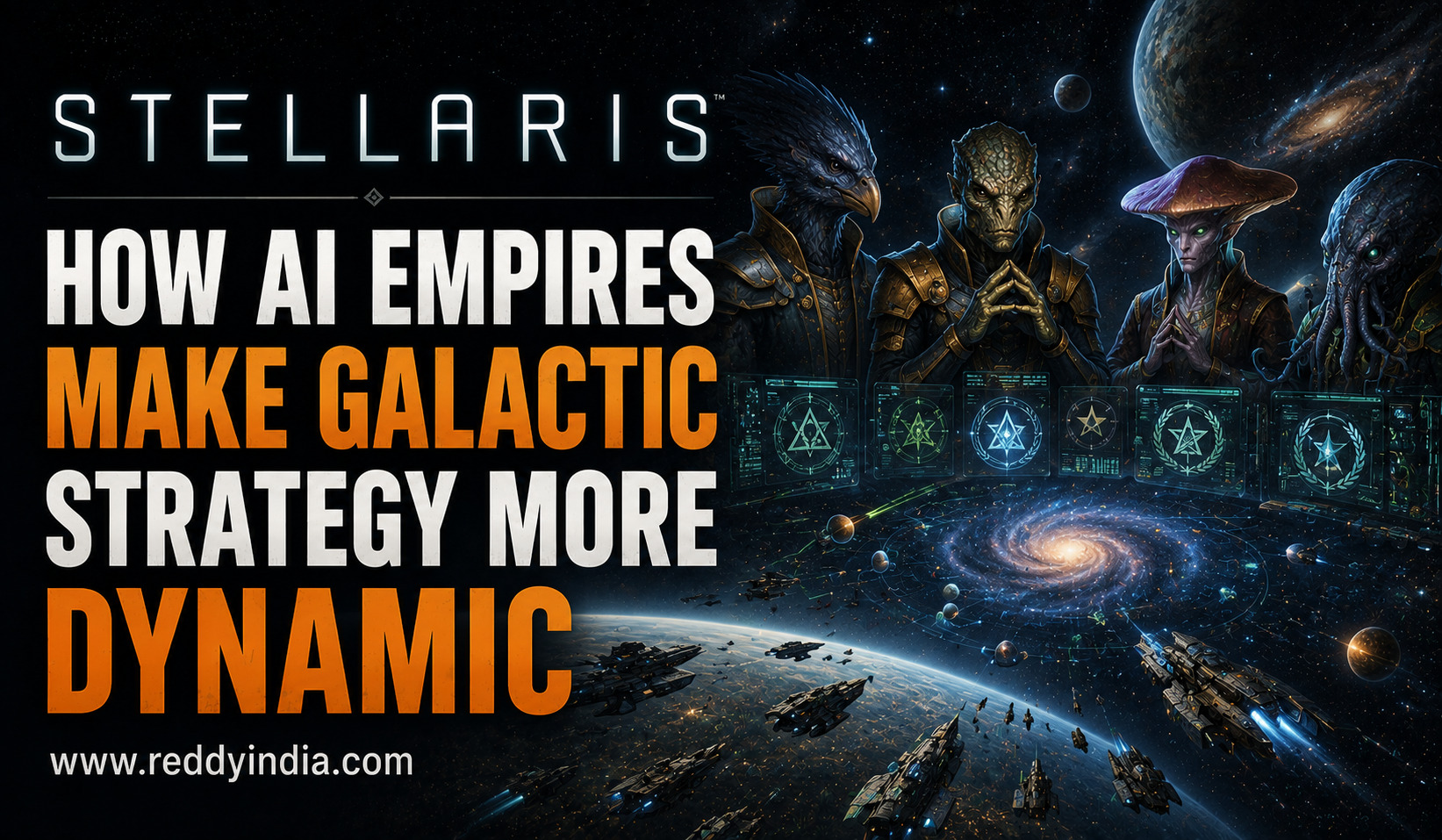
In the vast universe of Stellaris, building a powerful empire is only part of the challenge. The real excitement comes from dealing with other civilizations that have their own ambitions, personalities, military priorities, economies, and diplomatic goals. This is where artificial intelligence plays an important role. AI empires make the galaxy feel less like a collection of static factions and more like a constantly changing political and strategic environment.
Unlike strategy games where computer-controlled opponents simply follow predictable patterns, Stellaris uses AI-driven behavior to manage empires across a huge galactic sandbox. AI civilizations explore planets, expand their territory, develop technologies, negotiate with neighbors, build fleets, participate in wars, form alliances, and react to changing circumstances.
The result is a strategy experience where no two galactic campaigns have to unfold in exactly the same way.
What Makes AI Important in Stellaris?
Stellaris is a grand strategy and space simulation game developed by Paradox Development Studio. Players control an interstellar civilization and guide it through exploration, colonization, diplomacy, technology, warfare, and political development.
Because the game operates on such a large scale, the AI has to handle many different decisions at once. An empire might need to decide whether to expand toward a valuable star system, strengthen its borders, research new technology, improve relations with another civilization, or prepare for a potential invasion.
These decisions create a constantly shifting strategic environment.
AI empires are not simply obstacles placed between the player and victory. They can become trading partners, military rivals, ideological enemies, federation members, or unexpected allies. Their actions can force players to rethink plans that seemed safe only a few years earlier in the game.
AI Empires Create a Living Galactic Community
One of the strongest features of Stellaris is the feeling that the galaxy is populated by civilizations with different interests.
An AI empire may aggressively expand while another prefers diplomacy and economic development. Some civilizations may focus heavily on military strength, while others invest in technology or attempt to build influential diplomatic relationships.
This variety makes the galaxy more unpredictable.
For example, a player might discover a neighboring empire early in a campaign and assume it will remain peaceful. However, changes in diplomatic relations, territorial competition, or ideological differences can eventually turn that relationship into a serious rivalry.
The opposite can also happen. A civilization that initially appears threatening may become an important ally when both empires face a larger common enemy.
These changing relationships make strategic planning more complicated and interesting.
Expansion Becomes a Constant Strategic Puzzle
Territory is extremely important in Stellaris, and AI-controlled empires actively compete for valuable regions of space.
Star systems can contain resources, strategic locations, habitable planets, or useful routes for future expansion. When several civilizations are competing for the same area, every expansion decision can have diplomatic consequences.
An AI empire expanding toward the player’s borders may be interpreted as a threat. The player might respond by claiming nearby systems, strengthening defensive positions, or improving diplomatic relations with another neighboring civilization.
This creates a strategic chain reaction.
Instead of simply asking, “Where should I expand next?” players must consider questions such as, “Who controls the surrounding systems?”, “Will this expansion upset another empire?”, and “Can I defend the new territory?”
The AI therefore turns galactic expansion into a contest of timing, positioning, and diplomacy.
AI Makes Diplomacy More Important
Diplomacy is another area where AI-controlled civilizations add depth to Stellaris.
Every empire has different priorities and relationships. Some may be more willing to cooperate, while others may distrust the player’s civilization because of political differences, military behavior, territorial expansion, or previous conflicts.
This means that diplomacy cannot always be reduced to selecting positive or negative dialogue options.
Players need to understand the broader strategic situation. Improving relations with one empire may provide security against another. A trade agreement could strengthen the economy while also improving diplomatic ties. Joining a federation can provide military protection but may also create political obligations.
AI empires make these decisions feel meaningful because their behavior can change as the galaxy develops.
AI-Driven Warfare Changes the Battlefield
Military strategy is one of the most visible areas where AI influences gameplay.
AI empires manage fleets, defend important systems, attack opponents, and respond to military threats. While players still control their own strategic decisions, computer-controlled opponents help turn wars into dynamic contests rather than scripted encounters.
A military conflict can develop in unexpected directions. An AI empire may attack a vulnerable border, reinforce a threatened system, or exploit an opportunity created by another war.
This forces players to think beyond simply building the largest possible fleet.
Positioning, defensive infrastructure, fleet composition, economic capacity, and strategic objectives can all matter. A powerful military does not guarantee safety if an empire is surrounded by several rivals.
The AI effectively creates pressure that encourages players to think several moves ahead.
Different AI Personalities Encourage Different Strategies
One of the interesting aspects of Stellaris is that civilizations can have very different identities.
A militaristic empire can create an entirely different strategic environment from a technologically focused civilization. A highly diplomatic neighbor may provide opportunities for cooperation, while an aggressive empire can force the player to prioritize defense.
These differences encourage adaptation.
Players cannot rely on one universal strategy for every campaign. A peaceful economic approach might work well when neighboring empires are cooperative, but it could become dangerous if an aggressive civilization emerges nearby.
Similarly, a player focused heavily on military expansion may create fear among neighboring civilizations, causing them to form alliances against the growing power.
The AI therefore interacts with the player’s decisions instead of existing independently from them.
The Galactic Economy Also Depends on AI Decisions
Resources are central to long-term survival in Stellaris, and AI-controlled empires participate in the economic competition of the galaxy.
AI civilizations develop their economies, acquire resources, build infrastructure, and support their military forces. Their economic strength can influence their ability to wage war, expand territory, and maintain diplomatic relationships.
This creates an important strategic connection between economics and geopolitics.
A wealthy empire can potentially support larger fleets and more ambitious expansion. A technologically advanced civilization may gain advantages through research. Meanwhile, an empire with limited resources may become dependent on trade or alliances.
For players, watching these economic differences develop provides valuable information about future threats and opportunities.
AI Encourages Players to Adapt
Perhaps the biggest contribution of AI to Stellaris is that it discourages players from following a completely fixed plan.
A strategy that works during the early game may become ineffective later. A peaceful empire could suddenly find itself surrounded by hostile powers. A military rival could become a useful ally. A powerful federation could change the balance of power across an entire region of the galaxy.
Players must continuously evaluate the situation and adjust.
This is one reason Stellaris can remain engaging over long campaigns. The challenge does not come only from achieving specific objectives. It comes from responding to a galaxy that continues to evolve.
Why AI Makes Every Campaign Feel Different
Procedural galaxy generation already gives Stellaris significant replayability, but AI behavior adds another layer of unpredictability.
Even when players understand the game’s basic systems, they cannot completely predict how other civilizations will behave.
One campaign might feature peaceful cooperation and large alliances. Another could become dominated by territorial conflicts and frequent wars. A different game might see a technologically advanced empire emerge as the dominant power.
These variations create stories naturally through gameplay.
The player may remember the empire that unexpectedly betrayed an alliance, the rival that became a long-term enemy, or the smaller civilization that survived against overwhelming odds. Such moments are created by interactions between game systems and AI decisions rather than by a fixed storyline.
The Future of AI in Galactic Strategy Games
As artificial intelligence becomes more sophisticated across the gaming industry, strategy games have significant opportunities to make computer-controlled civilizations more responsive and believable.
Future improvements could allow AI empires to better understand long-term strategic goals, respond more intelligently to changing threats, and develop more recognizable diplomatic behavior.
For a game like Stellaris, stronger AI could make diplomacy, warfare, economics, and political competition even more interconnected.
The goal would not simply be to make AI opponents stronger. A good strategy-game AI should create interesting decisions for players. An opponent that always chooses the mathematically strongest action may be difficult, but an opponent that behaves logically while producing unpredictable situations can create a much more memorable experience.
Conclusion
AI empires are one of the key reasons Stellaris can feel like a living galactic strategy simulation. Their decisions influence expansion, diplomacy, warfare, economics, alliances, and the overall balance of power.
The AI does more than provide opponents for the player to defeat. It helps create an evolving political environment where relationships can change, conflicts can emerge unexpectedly, and strategic plans must constantly be adjusted.
By combining AI-controlled civilizations with exploration, procedural generation, diplomacy, economics, and large-scale warfare, Stellaris creates a galaxy where every campaign can develop its own story.
For players who enjoy strategy games that reward long-term thinking and adaptability, the unpredictable behavior of AI empires is a major part of what makes exploring the stars so compelling.