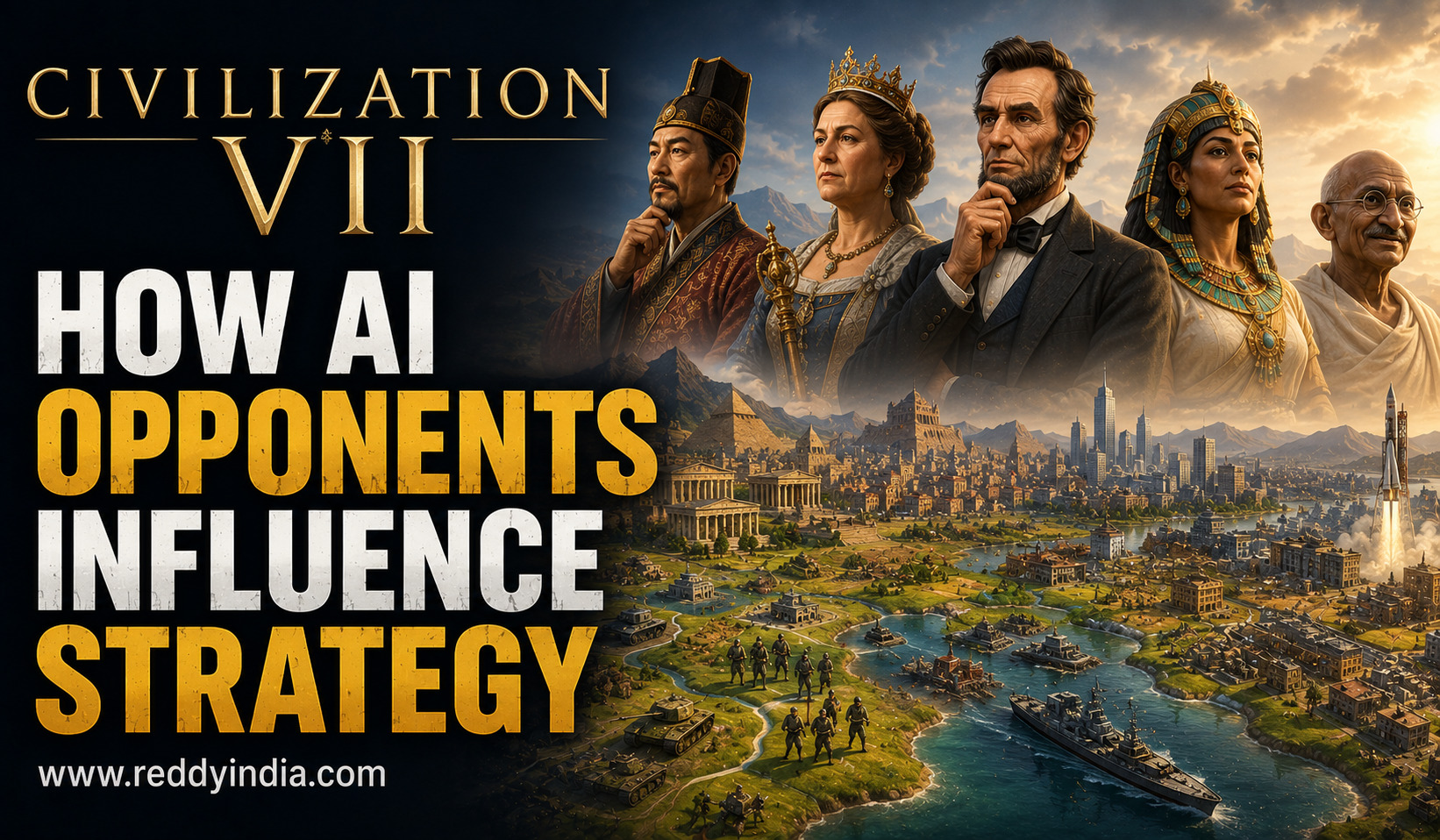
Civilization VII: How AI Opponents Influence Strategy
In a strategy game like Civilization VII, building a successful civilization is never just about managing cities, researching technologies, or producing powerful military units. Much of the challenge comes from competing with civilizations controlled by artificial intelligence. These AI opponents shape the world around the player by expanding territories, forming diplomatic relationships, developing economies, competing for resources, and responding to changing threats.
The behavior of AI civilizations can influence almost every major decision throughout a campaign. A player may begin with a clear plan to focus on science or culture, only to discover that an aggressive neighboring civilization is expanding rapidly. Another campaign might feature peaceful neighbors, creating opportunities for trade and cooperation.
This interaction between the player’s decisions and AI behavior helps make each game feel different.
Why AI Opponents Matter in Civilization VII
The Civilization series has always depended heavily on interactions between different civilizations. In Civilization VII, AI-controlled leaders and civilizations contribute to this competitive environment by pursuing their own goals.
An AI opponent may prioritize military expansion, economic development, technological advancement, cultural influence, or diplomacy. Because these priorities can differ, players must study the civilizations around them before deciding how to develop their own empire.
A strong economy might be enough to compete with one neighbor, while another may require a larger military presence. A civilization focused on culture could become a long-term competitor even without launching a war.
AI therefore creates strategic pressure without requiring every conflict to become a military confrontation.
AI Changes How Players Expand
Territorial expansion is one of the most important decisions in any Civilization game. Players need productive land, access to resources, strategic positions, and suitable locations for new settlements.
However, expansion becomes more complicated when AI civilizations are nearby.
An AI opponent may attempt to settle in the same region that the player considers valuable. This can force the player to make a decision: expand quickly, negotiate, change direction, or prepare for potential conflict.
The location of an AI civilization can therefore influence the entire development path of a player’s empire.
A peaceful neighbor may allow gradual expansion, while an aggressive civilization can encourage a more defensive approach. Even when war does not happen, the possibility of conflict can affect where players build cities and how they use their resources.
Diplomacy Becomes a Strategic Tool
AI opponents also make diplomacy an important part of the game.
Players interact with leaders who have their own personalities, objectives, relationships, and opinions. These relationships can evolve as the game progresses.
A civilization that starts as a friendly neighbor might become suspicious if the player expands too aggressively. Another leader may appreciate cooperation but become hostile when the player’s military becomes too powerful.
This means diplomatic decisions cannot always be viewed in isolation.
Players need to think about how one action might affect future relationships. Agreements, alliances, trade, competition, and conflicts can all influence the broader political environment.
Diplomacy becomes particularly important when the player is not strong enough to confront every rival directly. Building relationships with other civilizations can create security and provide alternatives to constant warfare.
AI Military Behavior Creates Pressure
Military strategy is another area where AI opponents can dramatically influence gameplay.
An AI civilization with a strong military can force the player to invest in defense even when war is not immediately happening. Border cities may need additional protection, while valuable resources could become strategic targets.
When a conflict does begin, AI behavior can determine how the war develops.
An opponent may attack vulnerable areas, defend important positions, or take advantage of weaknesses created by another conflict. Players therefore need to monitor the battlefield instead of assuming that an opponent will follow a predictable pattern.
This encourages strategic flexibility.
A player who invests entirely in economic or cultural development may become vulnerable to military pressure. At the same time, spending too many resources on the military can slow technological or economic progress.
The AI creates this tension by forcing players to consider both immediate threats and long-term objectives.
AI Encourages Different Playstyles
One of the biggest advantages of having varied AI opponents is that they can encourage players to experiment with different strategies.
If neighboring civilizations are aggressive, a defensive or military-focused strategy may become more attractive. If the surrounding world is relatively peaceful, players may have more freedom to invest in science, culture, infrastructure, or economic growth.
This makes the same opening strategy less effective in every campaign.
Instead of following a fixed formula, players must respond to the circumstances of their particular game.
The AI essentially becomes part of the strategic puzzle.
Competition for Resources
Resources can become another source of tension between the player and AI civilizations.
Valuable resources can influence military development, economic growth, infrastructure, and long-term strategic planning. When several civilizations want access to the same region, competition becomes unavoidable.
An AI opponent occupying a resource-rich area may force the player to reconsider expansion plans. In some cases, diplomatic cooperation may be preferable to confrontation. In other situations, securing the resource quickly may become a strategic priority.
These decisions demonstrate how AI behavior can affect economic planning as well as military strategy.
AI Makes the World Feel More Dynamic
A major strength of AI opponents is their ability to make the game world feel active.
Instead of waiting for the player to create every major event, other civilizations are constantly developing their own territories and pursuing their objectives.
An AI civilization can become unexpectedly powerful. Another may struggle economically and lose influence. A former rival could become a useful partner when a larger threat appears.
These developments create an evolving strategic environment.
The player is therefore not simply building an empire in isolation. They are participating in a larger competition where the actions of other civilizations can alter the balance of power.
AI Can Force Players to Change Long-Term Plans
Long-term planning is an important part of Civilization VII, but AI behavior can make those plans difficult to maintain.
Imagine beginning a campaign with the intention of becoming a cultural powerhouse. If a powerful military civilization establishes itself nearby, however, defensive investments may become necessary.
Likewise, a player focused on scientific progress may need to prioritize diplomacy if another civilization becomes suspicious of their growing power.
This does not make planning less important. Instead, it makes adaptability equally valuable.
The strongest strategy is often not the one that is planned perfectly from the beginning, but the one that can change when circumstances demand it.
The Importance of Reading AI Behavior
Successful players can benefit from observing how AI civilizations behave over time.
Their military buildup, territorial expansion, diplomatic relationships, and economic development can provide clues about their future intentions.
For example, a rapidly expanding neighbor may become a territorial threat. A civilization building significant military strength could be preparing for conflict. Meanwhile, an AI leader actively developing diplomatic relationships with multiple civilizations may be trying to create a strong political network.
Recognizing these patterns allows players to prepare before problems become serious.
This turns observation into an important strategic skill.
AI and Replayability
AI opponents also contribute significantly to replay value.
Even when players understand the basic mechanics of Civilization VII, the combination of different leaders, civilizations, maps, starting positions, resources, and AI decisions can create new strategic situations.
One campaign might involve peaceful development and international cooperation. Another could become a struggle for survival against an aggressive neighbor. A third might revolve around competition between several powerful civilizations.
Because the surrounding civilizations influence the player’s options, each campaign can tell a different strategic story.
The Future of AI in Civilization Games
AI technology continues to evolve, and strategy games have considerable potential to benefit from smarter computer-controlled opponents.
Future improvements could make AI civilizations better at understanding long-term consequences, adapting to player behavior, and responding to changing diplomatic or military conditions.
However, stronger AI should not simply mean more difficult opponents. The best strategy-game AI should create interesting choices rather than making the game feel unfair.
Ideally, AI leaders should behave in ways that are understandable enough for players to anticipate possible reactions while remaining unpredictable enough to keep the game exciting.
Conclusion
AI opponents play an important role in shaping the strategic experience of Civilization VII. Their decisions influence territorial expansion, diplomacy, warfare, resource competition, economic development, and long-term planning.
The most interesting part is that AI does not simply provide enemies for players to defeat. It creates a constantly changing environment in which every decision can have wider consequences.
A peaceful neighbor can become a rival. A military threat can become an ally. A small civilization can grow into a major power. These possibilities encourage players to observe the world, adjust their plans, and think beyond their immediate objectives.
Ultimately, AI opponents help transform Civilization VII from a simple empire-building game into a dynamic competition between civilizations. Their changing behavior keeps players thinking, adapting, and planning for a world that rarely develops exactly as expected.