Apex Legends: What Makes Its Gameplay Different?
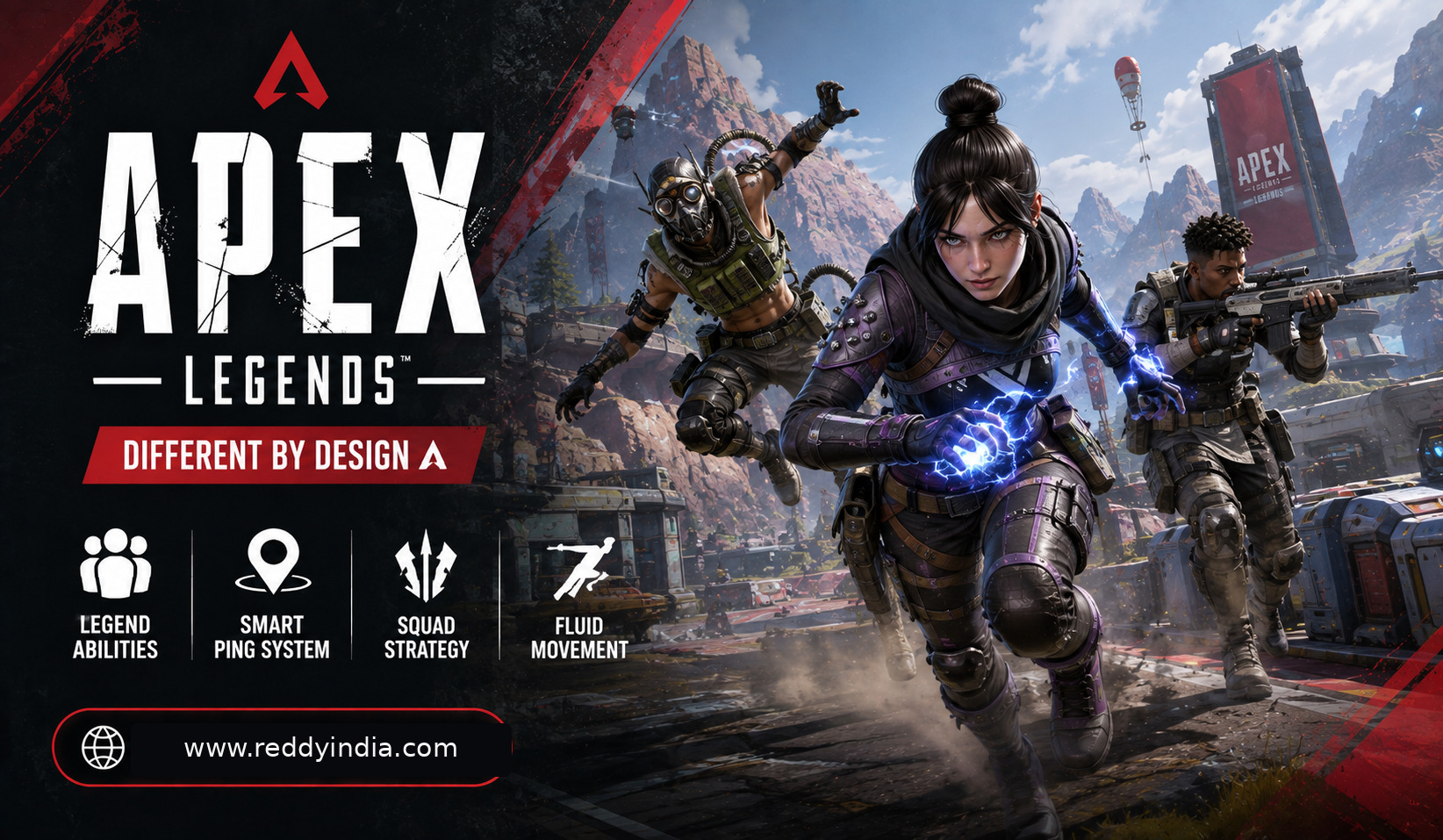
Apex Legends stands out in the battle royale genre because it combines fast movement, precise shooting, character abilities, squad-based strategy, and an unusually strong communication system. While many battle royale games focus primarily on weapons, positioning, and survival, Apex adds another layer through its roster of unique Legends.
That combination creates a game where winning is rarely about aim alone.
Players need to understand movement, abilities, team composition, map positioning, loot, rotations, communication, and timing. Even after several years, the game continues to evolve through new Legends, balance changes, weapons, maps, and gameplay systems. In 2026, Respawn continues that approach with major seasonal updates, including the Marked season, which launched on August 4, 2026, with a Bloodhound rework, a refreshed World’s Edge, new attachment mechanics, and additional Legend changes.
So, what exactly makes Apex Legends gameplay different?
A Battle Royale Built Around Legends
The first major difference is the Legend system.
Instead of every player having the same abilities, Apex gives players a selection of characters with unique skills. Each Legend has a passive ability, tactical ability, and ultimate ability. The roster is also divided into classes such as Assault, Controller, Recon, Skirmisher, and Support, with each class offering a different style of play.
This means team composition matters.
A squad might choose characters focused on mobility, information gathering, defensive control, or direct combat. The abilities of those characters can complement one another, creating strategies that would not exist in a traditional battle royale.
The result is a game where choosing your character is part of your overall strategy before the match even begins.
Movement Is One of Apex’s Biggest Strengths
Apex Legends has always placed strong emphasis on movement.
Running, sliding, climbing, jumping, zip lines, launch systems, and Legend-specific abilities can all influence how players move around the map.
Movement is not just a way to travel faster. It is a combat skill.
A player can slide around an opponent, quickly climb to higher ground, escape from danger, or reposition during a firefight.
Respawn has continued to treat movement as a central part of Apex’s design. During development of Season 29’s Axle, the studio described movement as a toolbox containing many different mechanics rather than a single feature.
That philosophy helps explain why Apex fights can look much faster and more fluid than those in many competing shooters.
Gunplay Still Matters
Although Apex contains many character abilities, shooting remains fundamental.
Weapons have different recoil patterns, fire rates, ranges, damage characteristics, and handling styles. Players need to understand how weapons behave and how they combine with movement.
The game therefore rewards both mechanical skill and decision-making.
A player can use excellent movement to gain an advantage, but they still need to land shots. Likewise, someone with strong aim may struggle if they cannot position themselves effectively.
Apex works because these skills support each other rather than existing separately.
High Mobility Changes Combat
Movement becomes particularly important during fights.
In a slower shooter, holding the correct angle can sometimes be enough to win an engagement. In Apex, opponents can quickly change elevation, slide around cover, climb structures, or reposition using abilities.
This creates constantly changing engagements.
Players need to track not only where enemies are but also where they could move next.
That makes fights feel less predictable and encourages players to master both offensive and defensive movement.
Abilities Change the Meaning of Positioning
Legend abilities give players additional ways to control the battlefield.
A tactical ability can provide information, create cover, block an area, move a player, or disrupt an opponent. Ultimates can influence even larger sections of a fight.
This makes positioning more complex.
A building is not automatically safe because an opponent may have an ability that can force you out.
Likewise, an open area may become useful if your team has a way to move quickly through it or create temporary protection.
Players constantly evaluate the relationship between the environment and available abilities.
Team Composition Matters
Apex is particularly dependent on teamwork.
The choice of Legends affects how a squad can approach combat.
Some combinations may provide excellent mobility. Others may specialize in information and defensive control. Another squad might build its strategy around aggressive engagements.
Because abilities interact, a team’s strength is not simply the sum of individual characters.
Players can combine skills to create coordinated attacks.
One Legend may locate enemies while another creates an entry opportunity, allowing a third teammate to push.
This makes communication and planning extremely important.
The Ping System Is a Major Innovation
One of Apex’s most influential features is its ping system.
Players can communicate information about enemies, loot, locations, and movement without needing voice chat. EA’s beginner guide specifically recommends using pings to alert teammates to enemy positions, identify loot, and guide the squad.
This might sound like a small feature, but it has a major impact.
Many multiplayer games rely heavily on microphones. Apex allows players to communicate strategically even when they do not want to speak.
That makes team coordination easier for strangers and reduces some of the communication barriers found in competitive multiplayer.
Looting Is Designed Around Speed
Looting also feels different because Apex emphasizes quick decision-making.
Players search for weapons, ammunition, armor, attachments, healing items, and other equipment while moving through the map.
The inventory system encourages players to make fast choices rather than spending too much time organizing their equipment.
Finding the right combination of weapons and attachments can immediately change how a player approaches combat.
At the same time, lingering too long in one location can expose a squad to enemy attacks.
This creates a constant balance between preparation and movement.
Respawning Teammates Changes the Battle Royale Formula
Another feature that makes Apex different is its approach to bringing eliminated teammates back.
The game gives squads opportunities to recover after a teammate has been eliminated, provided the necessary systems and timing are available.
This changes the emotional rhythm of a match.
In some battle royale games, losing one teammate can effectively end the team’s chances of success. Apex creates opportunities for comebacks.
A squad can lose a player, survive the immediate fight, retrieve the appropriate recovery item, and bring that teammate back into the match.
This keeps players engaged even after making mistakes.
Combat Is About More Than Eliminations
Apex encourages players to think about why they are fighting.
Not every enemy needs to be eliminated immediately.
A squad may decide to disengage, reposition, recover resources, or take a better angle instead.
Because movement and abilities are so important, escaping a bad fight can be just as valuable as winning a good one.
This creates a more strategic approach to combat.
Players are constantly evaluating risk, resources, positioning, and timing.
The Ring Forces Constant Decisions
Like other battle royale games, Apex uses a shrinking playable area to push squads toward conflict.
But because Apex has fast movement and numerous mobility abilities, ring rotations can become strategic opportunities.
A squad may rotate early and claim a strong position.
Another might wait and fight through a crowded area.
A highly mobile team may take a riskier route because it has better tools for escaping danger.
This makes the ring more than a countdown mechanic.
It becomes part of the strategy.
Map Knowledge Is Extremely Valuable
Apex maps contain different types of terrain, structures, pathways, and vertical spaces.
Players who know the environment well can recognize useful rotations, strong defensive positions, escape routes, and advantageous fighting areas.
Map knowledge is particularly important because abilities often interact differently with different environments.
A mobility-focused Legend may be extremely effective in one location while another area may favor defensive abilities.
The combination of map design and Legend abilities gives familiar locations multiple strategic possibilities.
Long Fights Can Be Just as Important as Quick Fights
Apex has a relatively flexible combat rhythm.
Some encounters are decided almost instantly.
Others can develop into longer exchanges where teams move between cover, heal, reposition, and attack from different angles.
This happens partly because movement and healing systems allow players to reset fights.
A squad may appear to have lost an engagement but successfully retreat, recover, and return from another direction.
That creates opportunities for tactical comebacks.
Apex Rewards Game Sense
Mechanical skill is important, but experienced Apex players also develop strong game sense.
They learn to recognize when a squad is vulnerable, when another team is likely to rotate, when an enemy has used an important ability, and when it is better to disengage.
They also learn to predict how other players will move.
This is where Apex becomes particularly deep.
A player can win an engagement before shooting by choosing a better position or forcing opponents into an unfavorable route.
Respawn Continues to Evolve the Formula
Apex’s gameplay is not static.
Respawn regularly adjusts Legends, weapons, maps, matchmaking, audio, and competitive systems. The studio’s 2026 roadmap emphasizes continued balance changes, Legend reworks, new Legends, weapon and loot changes, and improvements to competitive integrity.
Recent updates demonstrate how actively the developers continue to experiment.
Season 29 introduced the new Legend Axle along with mechanics such as Deathbox Respawns and Chained Healing.
Season 30 then introduced the Marked theme, updated Bloodhound’s abilities, refreshed World’s Edge, and added Corrupted Attachments.
These changes keep the competitive environment moving.
Why Apex Feels Different From Other Battle Royales
The biggest difference is the way Apex combines multiple systems.
Traditional battle royale gameplay provides the foundation:
Loot.
Weapons.
A shrinking zone.
Large maps.
Squad survival.
Apex adds another layer:
Unique characters.
High-speed movement.
Abilities.
Advanced team combinations.
The ping system.
Respawn mechanics.
Together, these features create a battle royale that feels more like a combination of a tactical shooter and a character-based action game.
The Learning Curve Is Part of the Appeal
Apex can be difficult for beginners because there are so many systems to learn.
New players must understand weapons, movement, Legends, map layouts, inventory management, armor, rotations, abilities, and team communication.
But that complexity also provides a strong sense of progression.
Players can spend months improving a single aspect of their gameplay.
They can learn advanced movement techniques, improve recoil control, master a Legend, or become better at reading rotations.
There is always another skill to develop.
What Makes Apex So Replayable?
Apex remains replayable because no two matches unfold exactly the same way.
Different teammates.
Different Legends.
Different loot.
Different enemy squads.
Different ring positions.
Different decisions.
All of these factors combine to create unique match situations.
Even familiar maps can produce completely different experiences depending on where players land and how other squads behave.
That unpredictability is one of the most important reasons players continue returning.
Conclusion
Apex Legends stands apart from other battle royale games because it combines fast movement, precise gunplay, unique character abilities, team strategy, and accessible communication.
Its Legend system gives every squad different strategic possibilities, while its movement mechanics make combat fluid and difficult to predict. The ping system makes teamwork possible without constant voice communication, and respawn mechanics give teams opportunities to recover from mistakes.
The game’s developers also continue changing its systems rather than leaving the formula untouched. In 2026, updates such as the Axle season and the Marked season have continued to experiment with movement, healing, Legend abilities, weapons, attachments, and competitive balance.
Ultimately, Apex Legends is different because it asks players to master several skills at once.
You need to aim.
You need to move.
You need to communicate.
You need to understand your Legend.
And you need to know when to fight—and when to escape.
That combination gives Apex its distinctive identity and makes every match feel like a fast-moving tactical puzzle rather than simply another battle royale round.