Cyberpunk 2077: Exploring AI and Technology in Night City
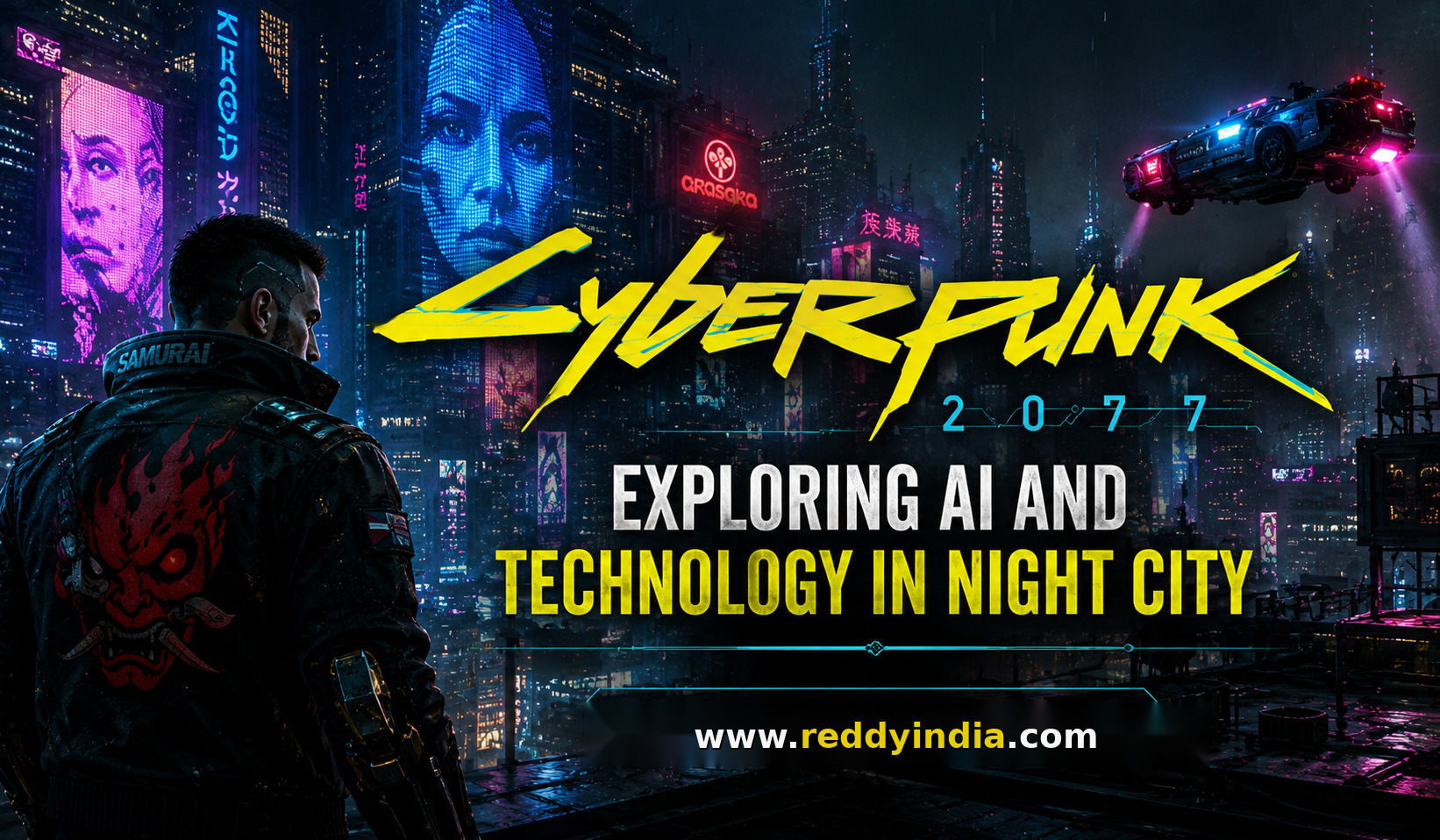
Cyberpunk 2077 presents a future where technology is deeply connected to everyday life. Set in Night City, the game imagines a world filled with cybernetic implants, artificial intelligence, autonomous machines, digital networks, advanced weapons, and corporations with enormous technological power.
Technology is not simply background decoration in Cyberpunk 2077. It influences the game’s story, characters, missions, combat, and the way people survive in Night City.
Artificial intelligence is particularly important. From digital assistants and advanced operating systems to autonomous vehicles and powerful artificial minds, the game explores questions about what happens when technology becomes more capable than humans expect.
As real-world AI continues to develop, many of Cyberpunk 2077’s ideas have become even more interesting. The game offers a fictional vision of a future where the boundaries between humans and machines become increasingly difficult to define.
Night City Is Built Around Technology
Night City is one of the most important characters in Cyberpunk 2077.
The city is filled with giant advertisements, neon signs, surveillance systems, cybernetic enhancements, automated infrastructure, and connected devices.
Technology is everywhere.
People use cyberware to improve their bodies. Businesses rely on advanced networks. Corporations control enormous technological resources, while ordinary citizens use whatever technology they can afford to survive.
This creates a world where technological progress has not necessarily produced a better society.
Instead, technology has increased both human capabilities and inequality.
That tension is central to the game’s cyberpunk identity.
Artificial Intelligence in Cyberpunk 2077
AI appears in several forms throughout the Cyberpunk universe.
Some systems are designed to assist humans, while others operate with levels of independence that raise deeper philosophical questions.
The game suggests that advanced artificial intelligence could eventually become something more than a tool.
AI systems may develop goals, knowledge, or behaviors that humans do not completely understand.
This idea becomes especially important when characters interact with digital entities that possess knowledge and capabilities beyond ordinary human limits.
The result is a world where players are constantly encouraged to question whether technology is serving humanity or beginning to operate on its own terms.
AI and the Question of Digital Consciousness
One of Cyberpunk 2077’s most interesting themes is the possibility of consciousness existing beyond the human body.
The game explores digital personalities, memories, identities, and artificial intelligence in ways that challenge the traditional definition of a person.
If a human mind could theoretically be copied into a digital system, would the copy still be the same person?
Would memories determine identity?
Could an artificial intelligence have its own rights?
These are fictional questions, but they connect with real discussions surrounding AI, digital identity, and machine consciousness.
Current AI systems do not demonstrate human consciousness simply because they can generate convincing language. However, science fiction such as Cyberpunk 2077 encourages people to think about what future technologies might eventually make possible.
Cyberware Shows the Relationship Between Humans and Machines
Cyberware is another major technological concept in the game.
Characters can replace or enhance parts of their bodies with mechanical and digital systems.
These modifications can improve strength, reflexes, perception, movement, or combat abilities.
This creates an important theme: technology does not simply exist outside the human body.
It becomes part of the person.
The more characters modify themselves, the more Cyberpunk 2077 asks players to consider where the boundary between human and machine actually exists.
This idea is one of the defining themes of the cyberpunk genre.
AI Could Influence Future Open-World Games
Cyberpunk 2077 also demonstrates how AI could influence the future of open-world game design.
Night City contains a huge number of characters, vehicles, locations, businesses, and interactive systems.
Modern games rely heavily on programmed behaviors to make these worlds function.
Future AI systems could make NPCs more adaptive.
Instead of characters following fixed schedules and responses, they could potentially react to events in more sophisticated ways.
For example, an NPC could remember a player’s previous actions, change its behavior based on local events, or respond differently depending on the player’s reputation.
This could make open worlds feel less scripted.
Smarter NPCs Could Change Night City
Imagine a future version of Night City where every important NPC has a more sophisticated behavioral system.
A shopkeeper might remember previous interactions.
A gang member could respond differently depending on the player’s relationship with their organization.
A fixer might offer different opportunities based on completed missions.
A civilian could react to major events occurring in their neighborhood.
These systems could create the feeling that Night City is continuously evolving.
Instead of simply completing missions that developers have predetermined, players could influence how relationships and situations develop.
AI Could Make Conversations More Dynamic
Dialogue is another area where artificial intelligence could change open-world games.
Cyberpunk 2077 features extensive scripted conversations designed around specific characters and story moments.
Generative AI could potentially allow future games to create more flexible interactions.
Players could ask questions in their own words and receive responses based on the character’s personality, knowledge, and relationship with the player.
For example, an NPC could explain what happened during a previous mission or offer information about a particular area.
However, scripted dialogue would still have an important role.
Major story moments require careful writing, pacing, acting, and emotional direction.
AI could potentially expand optional conversations without replacing professionally written narrative scenes.
Autonomous Vehicles and Intelligent Transportation
Vehicles are another important part of Night City.
The game’s streets are filled with cars, motorcycles, pedestrians, and traffic systems.
Advanced AI could make future open-world traffic more realistic.
Vehicles could respond dynamically to accidents, road closures, emergency situations, and player behavior.
Drivers could have different personalities and risk tolerances.
Some might drive carefully, while others could become aggressive when traffic becomes congested.
These details could make city exploration feel more natural.
AI and Surveillance
Cyberpunk 2077 also presents a future where surveillance technology is extremely powerful.
Cameras, digital systems, tracking technologies, and corporate networks can collect enormous amounts of information.
This reflects real-world concerns about privacy.
As AI becomes better at analyzing images, voices, behavior, and large datasets, surveillance systems could become more capable.
Cyberpunk 2077 exaggerates these possibilities for dramatic effect, but the underlying question remains relevant: how much personal information should organizations be allowed to collect?
The game presents a world where technological power can easily become social power.
Corporations and Technological Control
Large corporations play a central role in Night City.
Technology gives these organizations enormous influence over communication, security, entertainment, medicine, finance, and other areas.
AI could potentially increase this concentration of power.
A company with access to advanced AI might be able to automate large portions of its operations, analyze massive amounts of information, or make decisions at a scale that humans cannot match.
Cyberpunk 2077 uses fictional corporations to explore what could happen when technological advancement is controlled by organizations whose primary goals may be economic or political.
AI and the Future of Gaming
The ideas presented by Cyberpunk 2077 could become increasingly relevant to game development.
AI may help developers create more believable characters, generate environmental variations, analyze gameplay data, improve testing, and support creative workflows.
However, the most interesting possibility is adaptive storytelling.
Future games could potentially respond to player decisions in ways that go beyond traditional branching narratives.
Instead of choosing between a few predefined endings, players could influence relationships, events, and characters through thousands of smaller decisions.
This could make each player’s experience feel more personal.
Technology Does Not Always Mean Progress
One of Cyberpunk 2077’s strongest messages is that technological progress does not automatically create a better world.
Night City has extraordinary technology, but it also has poverty, crime, inequality, exploitation, and social instability.
This is an important distinction when discussing artificial intelligence.
AI can increase productivity, improve services, and create new possibilities, but the results depend on how society chooses to use it.
Technology is a tool.
The people and institutions controlling that tool determine its impact.
What Cyberpunk 2077 Gets Right About AI
Cyberpunk 2077 does not attempt to predict the future perfectly.
Instead, it uses technology to explore human questions.
Who controls technology?
What happens when machines become extremely powerful?
Can identity exist digitally?
Should artificial intelligence have rights?
What happens when corporations control advanced technological systems?
These questions make the game more than a futuristic action RPG.
They give its technology a philosophical purpose.
The Future of AI in Open-World Games
As AI technology improves, open-world games could become increasingly reactive.
NPCs might remember interactions, environments could adapt to player behavior, and side missions could become more personalized.
Game worlds could potentially simulate larger populations and more complex social systems.
However, developers will still need to balance freedom with narrative control.
Too much unpredictability could weaken carefully written stories.
The most effective future may combine traditional scripted content with AI-driven systems operating around it.
That approach could preserve strong storytelling while making the surrounding world feel more alive.
Conclusion
Cyberpunk 2077 uses AI and technology to explore what happens when humanity becomes deeply dependent on machines.
From cyberware and digital consciousness to intelligent systems, surveillance, autonomous technology, and corporate control, Night City presents a future where technology affects nearly every part of life.
The game also offers valuable ideas for the future of gaming. AI could eventually create smarter NPCs, more dynamic conversations, adaptive missions, and open worlds that respond more naturally to player behavior.
But Cyberpunk 2077 reminds us that technology is never just about capability. It is also about responsibility, control, identity, and human choice.
That is what makes Night City’s vision of the future so compelling: the most important question is not how intelligent technology becomes, but what humanity chooses to do with it.