Valorant: Understanding Its Unique Gameplay Mechanics
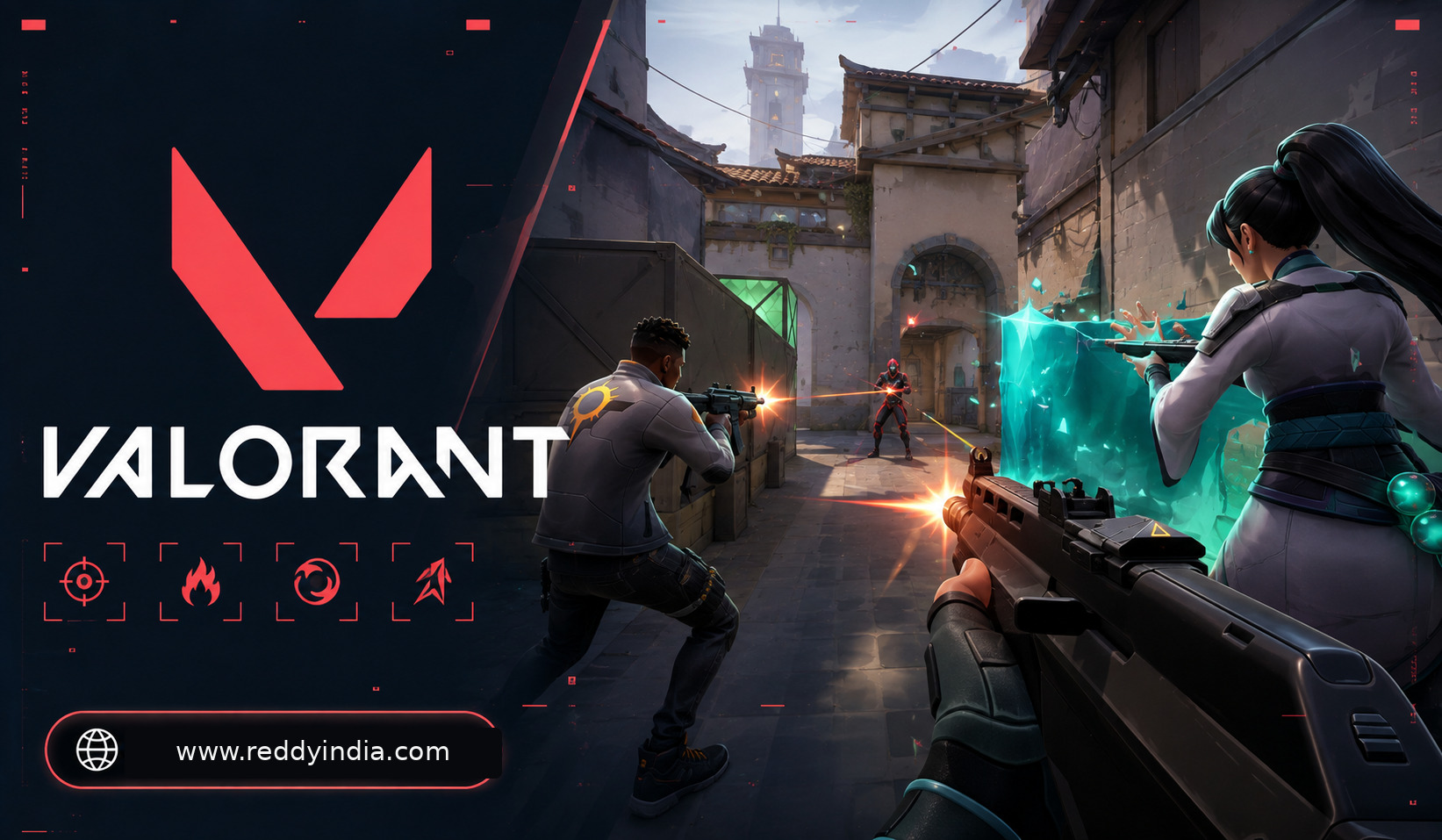
Valorant has become one of the most recognizable competitive tactical shooters by combining precise gunplay with character abilities. Developed by Riot Games, the game takes the familiar foundations of tactical shooters—teamwork, accuracy, positioning, economy management, and round-based combat—and adds a roster of unique Agents with specialized abilities.
This combination gives Valorant its distinctive identity. Winning is not simply about having better aim. Players also need to understand how abilities interact with weapons, how to control space, when to attack or defend, and how to manage limited resources.
For beginners, Valorant can initially feel complicated. Once its core mechanics become familiar, however, the game’s design becomes much easier to understand. Here is a closer look at the features that make Valorant different from conventional shooters.
What Makes Valorant Different?
Valorant is a 5v5 tactical shooter built around attacking and defending objectives. In the standard competitive format, one team attacks while the other defends, with the attacking side attempting to plant the Spike and the defending side trying to prevent or defuse it.
What makes Valorant unusual is the combination of tactical shooting and character-based abilities.
Every Agent has a different set of skills. Some can create protective walls, others can gather information, control areas, heal teammates, block visibility, or initiate attacks.
This means every round contains two interconnected layers.
The first is traditional gunplay.
The second is ability-based strategy.
Strong players understand how to combine both.
Precise Gunplay Is Still the Foundation
Despite its ability system, Valorant remains heavily dependent on shooting accuracy.
Weapons have different damage values, recoil patterns, fire rates, ranges, and costs. Headshots are especially important because accurate players can eliminate enemies quickly.
Movement also matters.
Players who run while firing generally have less control over their shots, making positioning and movement discipline essential. Learning when to stop, shoot, reposition, and peek is one of the earliest skills new players should develop.
This creates an interesting balance.
Abilities can create opportunities, but players still need reliable mechanical skill to capitalize on those opportunities.
The Spike Creates Tactical Pressure
The Spike is at the center of Valorant’s main attack-and-defense objective.
Attackers can attempt to plant the Spike at designated sites. Once planted, defenders must eliminate the attacking team or defuse the device before it detonates.
This creates pressure throughout every round.
An attacking team does not necessarily need to eliminate every defender. Successfully planting the Spike can force defenders into difficult positions.
Likewise, defenders do not always need to chase attackers across the map. Sometimes holding a site and protecting the objective is the better strategy.
The Spike therefore creates a tactical structure where time and positioning matter as much as eliminations.
Agents Create Different Gameplay Roles
One of Valorant’s defining mechanics is its Agent system.
Agents are organized into four broad roles: Duelists, Initiators, Controllers, and Sentinels.
Duelists are generally designed to create openings and take aggressive fights.
Initiators help teams gather information or disrupt defenders so teammates can enter contested areas.
Controllers specialize in controlling visibility and space through tools such as smoke.
Sentinels focus on defense, information, healing, or protecting areas.
These categories do not completely determine how an Agent must be played, but they provide a useful framework for understanding team composition.
Abilities Change How Players Control Space
Abilities are not simply extra weapons.
Many are designed to control space.
A smoke can block an opponent’s vision. A wall can prevent or delay movement. A trap can discourage enemies from entering an area.
This means players can influence where opponents are willing to move.
For example, blocking one pathway can force an enemy team toward another route. A well-placed ability may therefore create an advantage without dealing any damage.
This is one of the most important ideas in Valorant.
Winning space can be just as valuable as winning fights.
Information Is a Powerful Resource
Valorant places a major emphasis on information.
Knowing where an enemy is—or where they are not—can completely change a round.
Some Agents have abilities that reveal locations, detect movement, or gather information about opponents. Players can also learn information through sound, enemy utility, minimap signals, and observing patterns.
A team that knows an enemy is defending one site heavily may choose to attack somewhere else.
In this way, information can create advantages before a gunfight even begins.
Sound and Audio Cues Matter
Audio is another critical gameplay mechanic.
Players can hear footsteps, gunshots, ability effects, Spike interactions, and other sounds.
These signals can reveal an opponent’s approximate location or indicate what is happening elsewhere on the map.
Good players listen carefully because sound can provide information without direct visual confirmation.
This is especially important in situations where only a few players remain alive.
Sometimes the difference between winning and losing a round comes down to recognizing a single sound cue.
Economy Management Adds Another Layer
Valorant also includes an economy system.
Players earn credits based on round results and certain actions. These credits are used to purchase weapons, shields, and abilities.
This means players cannot always buy their preferred equipment every round.
Teams must decide when to spend aggressively and when to save resources.
A team that loses a round may intentionally purchase less equipment in order to afford stronger weapons in the following round.
Understanding these economic decisions is an important part of competitive play.
Weapon Selection Matters
Valorant’s weapon system includes pistols, submachine guns, rifles, shotguns, sniper rifles, and heavy weapons.
Each weapon behaves differently and is suited to particular situations.
Rifles are popular because they provide a strong balance between range and damage. Shotguns can be effective at close range. Sniper rifles reward players who can hold long angles accurately.
The right weapon depends on the map, economy, position, and planned strategy.
A player with a cheaper weapon can still win against an opponent with an expensive rifle if they control the engagement properly.
That creates opportunities for strategic “eco” and “force-buy” rounds.
Maps Are Designed Around Strategic Choices
Valorant maps are not simply visual environments.
They are built around chokepoints, lanes, sites, defensive positions, and alternative routes.
Players must learn how these spaces interact.
A narrow entrance may be dangerous to push but easy to defend. Another route may take longer but provide an opportunity to approach from an unexpected direction.
Understanding map geometry allows players to predict where opponents are likely to position themselves.
Map knowledge also improves ability usage because players can learn the most effective locations for smokes, flashes, traps, and other tools.
Timing Can Be More Important Than Aim
Valorant often rewards patience.
A player who rushes into an area may lose even with excellent aim because they entered at the wrong moment.
Waiting for a teammate to use an ability can make an attack significantly easier. Likewise, defenders can delay an enemy push until the opposing team runs out of time or resources.
Timing becomes particularly important near the end of rounds.
A team with fewer players can sometimes win by carefully delaying the opponent rather than taking unnecessary fights.
Team Coordination Is Essential
Valorant is fundamentally a team game.
Individual skill matters, but coordinated teams can consistently outperform teams of mechanically talented players who do not communicate.
Players can share information about enemy positions, coordinate ability combinations, plan site attacks, and adjust strategies during the round.
Even simple communication can be valuable.
Calling out an enemy location or warning teammates about an incoming push can prevent unnecessary deaths.
Good teams also understand each player’s role without becoming overly dependent on rigid strategies.
Ability Combos Create Advanced Strategies
The most interesting Valorant tactics often come from combining abilities.
One Agent can use an ability to reveal enemies while another blocks their escape route. A third player can then attack while opponents are distracted.
These combinations can transform ordinary abilities into much stronger tactical tools.
Learning individual abilities is therefore only the beginning.
Advanced players study how different Agents can work together and develop setups specifically for particular maps or situations.
Ultimate Abilities Can Change a Round
Agents also have ultimate abilities that require players to accumulate ultimate points.
Ultimates are generally more powerful than standard abilities and can significantly affect a round.
Depending on the Agent, an ultimate can provide information, create pressure, revive a teammate, control a large area, or make aggressive plays safer.
The timing of an ultimate can matter enormously.
Using it too early may waste an opportunity, while saving it for too long could result in never using it.
This creates another decision-making layer in every match.
Adaptation Is One of Valorant’s Biggest Skills
A strong player does not use the same strategy every round.
Opponents observe patterns and adapt.
If a team repeatedly attacks one site, defenders may begin stacking that location. If a player always peeks from the same angle, opponents can prepare for it.
This creates a constant cycle of adjustment.
Players need to recognize when a strategy has become predictable and change their approach.
The best Valorant teams therefore combine preparation with improvisation.
Valorant Rewards Game Sense
“Game sense” is the ability to understand what is likely happening even without complete information.
A player may notice that several enemies were spotted on one side of the map and conclude that the remaining area is less defended.
They may recognize that an opponent is likely saving because of poor equipment.
They may predict a push based on previous rounds.
These decisions come from experience rather than mechanical skill alone.
As players improve, game sense becomes one of the biggest differences between beginners and advanced competitors.
Why Valorant Is So Competitive
Valorant’s competitive depth comes from the way its systems interact.
Gunplay rewards precision.
Abilities reward creativity.
Maps reward positioning.
Economy rewards planning.
Communication rewards teamwork.
Game sense rewards experience.
No single mechanic completely determines the outcome.
A player can have excellent aim but struggle with positioning. Another can have strong strategy but weak mechanics. The strongest competitors combine multiple skills.
How Beginners Can Improve
New players should avoid trying to master everything at once.
Start by learning a small number of Agents rather than constantly switching between characters. Become comfortable with one or two weapons and learn the layouts of a few maps.
Focus on crosshair placement, movement, basic communication, and economy decisions.
Most importantly, pay attention to why you died rather than only blaming your aim.
Ask whether you were exposed from multiple angles, used an ability too early, ignored useful information, or entered a fight without support.
That habit can accelerate improvement.
The Future of Valorant’s Gameplay
Valorant’s core formula has proven flexible because new Agents, maps, weapons, and mechanics can add strategic possibilities without removing the importance of fundamentals.
As the game develops, its competitive environment will continue to evolve.
New abilities can create new team combinations. Map changes can alter established strategies. Players can discover techniques that developers may not have originally expected.
That constant experimentation helps keep the game competitive and engaging.
Conclusion
Valorant’s unique gameplay comes from the combination of tactical shooting and character-based abilities.
Players must understand weapons, movement, map layouts, the Spike, economy management, information, positioning, and Agent abilities. But the game’s greatest depth comes from how these systems interact.
A well-placed smoke can create an opening. A good information ability can reveal an enemy’s position. A coordinated team can combine multiple abilities to break a defense. Smart economy decisions can determine whether a team is prepared for the next round.
Ultimately, Valorant is not just about who can aim better.
It is about who can make better decisions under pressure.
That combination of precision, strategy, communication, and adaptation is what gives Valorant its distinctive place in the competitive gaming world.