How Game Development Works: From Idea to Launch
Before any player sees a trailer, a game has usually survived months of broken builds and rewrites. That hidden work is exactly how game development works, yet most players never see it. Because the process has many stages, it can sound confusing at first. So this guide follows one game from first idea to launch day, step by step. Along the way, you will also meet the people who make it all possible.
Starting with a simple idea
Every game begins with a short pitch. It might be one plain sentence about a hero, a goal, and a problem. A clear pitch keeps the team focused, so designers often test it long before anyone writes code. Some ideas even start at a game jam, a short event where teams build a small game in days. If the idea cannot be explained quickly, it usually needs more work.
Next comes a big question: who is this game for? A quiet puzzle game for phones has very different goals from a huge shooter for consoles. So early choices about platform and budget shape almost everything that follows. Teams also study similar games already on sale. That is not about copying, because the point is to spot what players enjoy and what is missing.
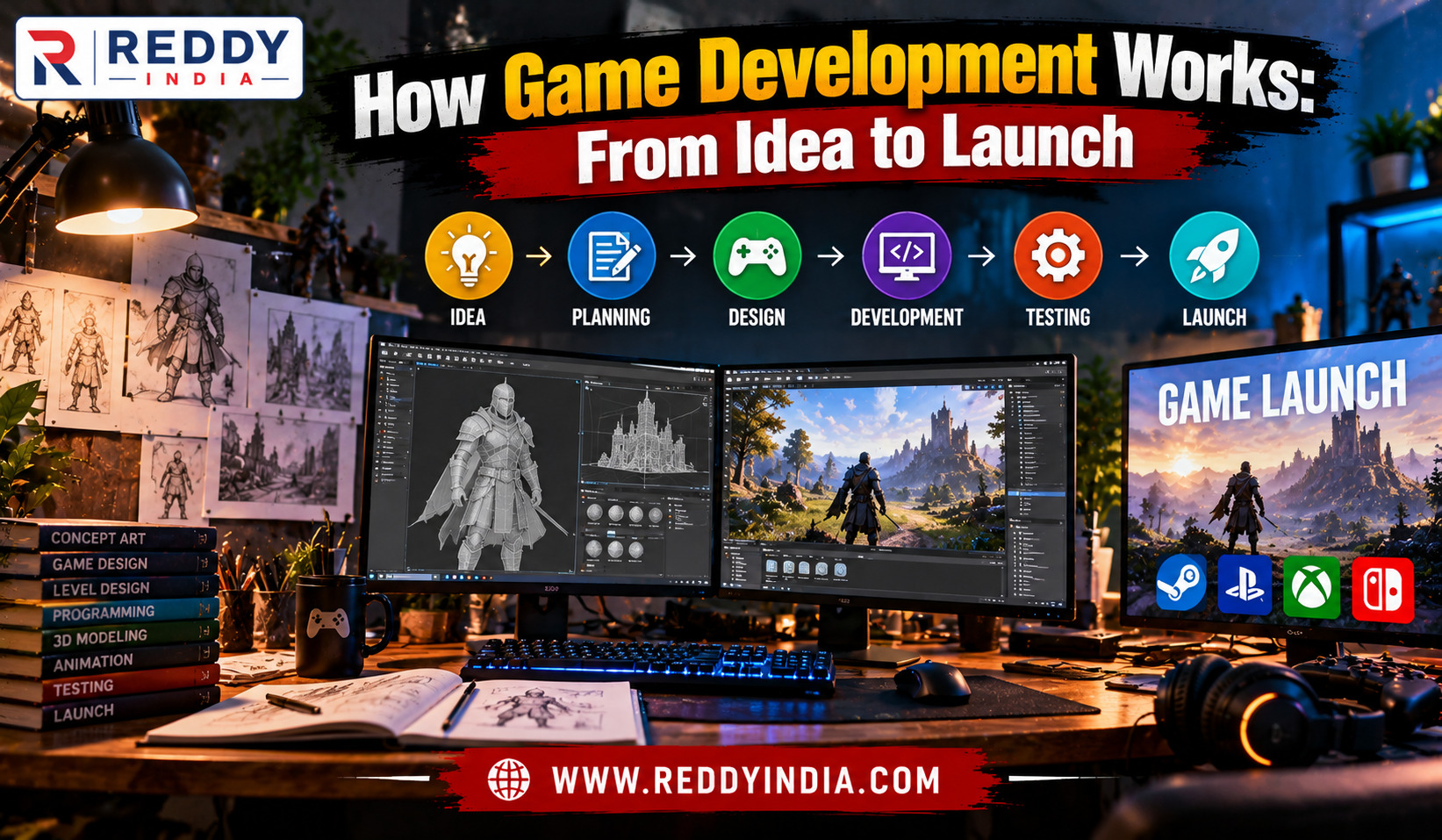
Here is a quick map of the whole journey before we go deeper. It shows each stage, what happens, and the main goal.
| Stage | What happens | Main goal |
| Concept | The team writes a short pitch | Pick a clear idea |
| Pre-production | A prototype and design document | Prove the idea is fun |
| Production | Art, code, sound, and levels | Build the full game |
| Testing | Alpha, beta, and QA checks | Find and fix bugs |
| Launch and after | Release, patches, updates | Keep players happy |
Pre-production: prototypes and planning
Pre-production is the testing ground, so the team starts small. First, it builds a rough prototype, a quick and ugly version that checks if the core action is fun. If the core action feels dull now, fancy art will not fix it later. That is why many studios drop weak ideas early, even when it hurts.
While the prototype takes shape, the team writes a game design document. This plan explains the rules, goals, and main features, so everyone can check it when questions come up. While some studios keep it short, others turn it into a living guide that changes every week. Either way, it gives the team one shared source when opinions clash.
Some teams also build a vertical slice, a short, polished piece that shows the final look and feel. It proves the idea works, so studios often use it to win over a publisher. If you are wondering, a publisher is a company that helps pay for a game and sells it.
Production: how game development works day to day
Production is the longest stage, and it is where most people join the team. While each person handles a different job, the work moves forward in parallel. Here is a simple view of the main roles.
- Designers shape the rules, levels, and balance.
- Programmers write the code that makes everything run.
- Artists and animators create the characters, worlds, and movement. They often start with concept art, which is a sketch of how a character or place might look.
- Sound designers and composers add music and effects.
- Producers keep the schedule, budget, and team on track.
Since small teams often share jobs, the process looks different in indie games vs AAA games. Meanwhile, large studios split the work among many specialists.
Work is usually divided into milestones, which are goals set for certain dates. For example, one milestone might be a playable first level. When a publisher funds the game, payments are often tied to these dates.
Deadlines can cause trouble, though. Many studios have faced crunch, which means long extra hours near a deadline. Because it can harm health and morale, crunch remains a hotly debated issue.
Game engines and tools
A game engine is a software toolkit that handles graphics, physics, sound, and player input. Physics here simply means how objects move, fall, and collide. Once an engine covers these basics, a team does not have to build everything from zero. Early programmers had no such toolkits, so they built games almost from scratch, as the history of video games shows.
Today, Unreal Engine and Unity are two widely used engines. Godot is another option, and it is free and open source, which means anyone can use and change its code. Some large studios build their own engines instead, so they can shape the tools around their exact needs.
Still, the choice matters more than it seems. As an engine affects hiring, cost, and the games a team can make, many teams pick one during pre-production. That way, the real building can start on solid ground.
Testing: alpha, beta, and bug fixing
Testing starts long before launch, but it gets serious in the final months. In the alpha stage, the game can be played from start to finish, yet it still has many bugs. A bug is simply a mistake in the game, such as a door that will not open.
After alpha comes beta, when the game is nearly complete. Some studios invite outside players to try it, since fresh eyes spot problems the team no longer notices. Meanwhile, the programmers keep fixing the worst issues first.
Throughout this period, quality assurance (QA) testers play the same sections again and again on different devices. They hunt for crashes, broken quests, and menu errors, and their reports tell programmers what to fix first. They also check performance, which means whether the game runs at a steady speed on weaker devices. In my view, a game that feels smooth on release day often owes a lot to testers nobody thanks.
Launch day
Before a console game goes on sale, the platform owner usually runs its own checks. Sony, Microsoft, and Nintendo each have rules that a game must pass. On PC, stores such as Steam also have their own submission steps. These checks take time, which means teams plan for them well before the release date.
The team also prepares for the day itself. While trailers, demos, and store pages build interest in the weeks before, the team gets the final build ready. Once the build is final, studios often say the game has gone gold. Even then, the work is not over.
Many games ship with a day-one patch, which is an update released on launch day to fix last-minute bugs. Cyberpunk 2077 launched in December 2020 with many bugs and then received months of patches. Cases like that show how hard it is to ship a huge game cleanly.
Life after launch
Although launch used to feel like the finish line, it is not anymore. After release, studios fix bugs, balance gameplay, and sometimes add new content. DLC, short for downloadable content, is extra story, items, or modes that arrive after the main game.
Some games go further and become a live service, which means they keep getting new seasons and events for years. Fortnite is a well-known example. These updates give players a reason to return, so a game can stay popular long after its first week.
Player feedback also guides the next steps. Studios read reviews, watch forums, and track bug reports, then adjust their plans. Because of this, the end of development is really the start of a long conversation with players.
Key Takeaways
- Starting point: a short pitch that the team tests early.
- Pre-production: a prototype, a game design document, and sometimes a vertical slice.
- Production roles: designers, programmers, artists, sound teams, and producers.
- Engines: Unreal Engine, Unity, and Godot are widely used.
- Testing: alpha first, then beta, with QA testers throughout.
- After launch: day-one patches, DLC, and live service updates.
Frequently Asked Questions
How long does it take to make a game?
A small game can take months, while large projects often take several years.
What is pre-production in game development?
It is the planning stage, so the team builds a prototype and writes a game design document there.
What is the difference between alpha and beta?
Alpha is playable but unfinished, while beta is nearly complete and often tested by outside players.
Which engines do game developers use?
Unreal Engine, Unity, and Godot are popular choices, and some studios build their own.
Can you explain how game development works in short?
Teams pitch an idea, build a prototype, create the full game, test it, launch it, and keep updating it.
Conclusion
Now you know how game development works, from the first pitch to the last patch. Each stage has its own job, so skipping one usually causes trouble later. Because of that, a delay can be a sign of careful testing rather than laziness. Next time a game feels smooth, remember the designers, programmers, and testers behind it.