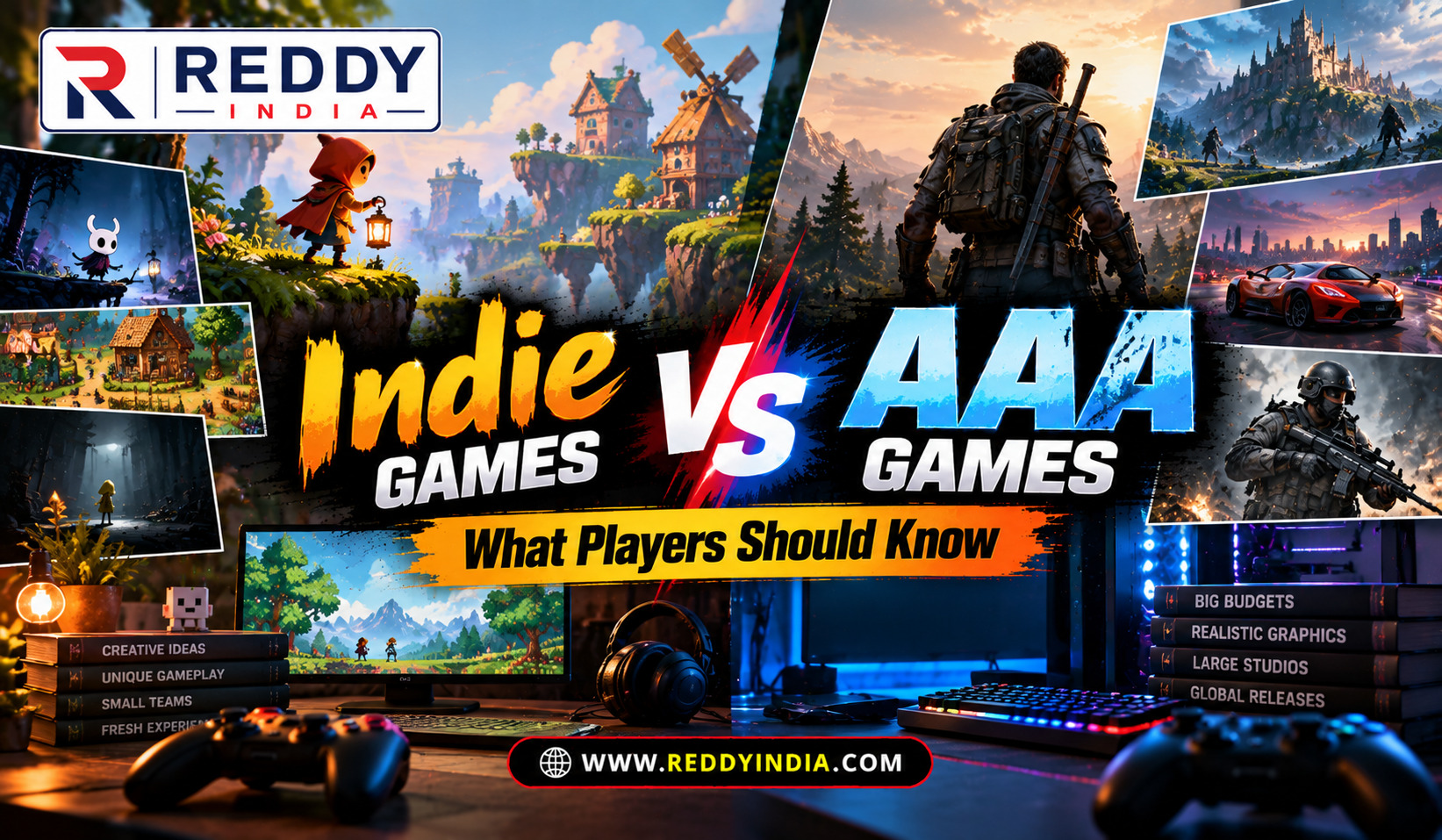
Indie Games vs AAA Games: What Players Should Know
Plenty of players pay full price for a blockbuster, then end up loving a small indie game more. Since players keep asking, the debate over indie games vs AAA games never really ends. Because each side offers something different, it helps to know what you are paying for. So this guide explains the terms, compares budgets and gameplay, and shows where each side shines. Once you finish, you will know where to spend your time and money.
What indie and AAA really mean
The word indie is short for independent. An indie game is made by a small team, or even one person, without a large publisher steering the project. Because many indie developers sell their games directly, they often keep more creative freedom. Some do work with publishers, so the line is not always sharp.
AAA, said as triple-A, describes big-budget games from large studios and major publishers. There is no official rule for the term, so people use it loosely. For example, Red Dead Redemption 2 from Rockstar Games and The Last of Us from Naughty Dog fit this label. Meanwhile, studios in the middle are often called AA, which means smaller budgets than AAA.
Stardew Valley, made by developer Eric Barone, and Hollow Knight from Team Cherry are well-known indie hits. In fact, the earliest games came from tiny teams, as the history of video games shows. Even so, the gap between the two sides is not about talent. Instead, it is mostly about money, time, and the number of people involved.
Indie games vs AAA games: a quick comparison
This table sums up the usual differences, though real games rarely fit a neat box. Keep in mind that there are many exceptions.
| Feature | Indie games | AAA games |
| Team size | One person to a few dozen | Often hundreds of people |
| Budget | Usually small | Often very large |
| Creative risk | Often higher | Often lower |
| Graphics | Often stylized | Often realistic |
| Hardware needs | Often modest | Often high |
| Typical price | Often lower | Often premium |
Since these are patterns and not laws, always check a specific game before you buy it. A tiny studio can surprise you with polish, and a giant studio can still ship a rough game.
Budget and team size
Money shapes almost every choice in game making. Since AAA projects can cost tens of millions of dollars or more, they use large teams with many specialists. As a result, one game may involve designers, artists, writers, voice actors, and marketing staff working in different studios.
Indie teams, however, work with far less. One developer may design, code, and draw the game alone, so every hour counts. That limit pushes them to pick a small idea, so they can finish it well. Because of this, a good indie game often feels tight rather than bloated.
Time is another gap. Large projects often take several years, so a delay can cost a studio a great deal of money. A solo developer, on the other hand, can change direction quickly when an idea does not work.
To see how these teams plan their work, how game development works breaks down each stage in simple terms. Still, the size of the budget decides how big the dream can be.
Gameplay and creativity
A failed AAA game can cost a studio dearly, so publishers often favor sequels and familiar genres. That is not always bad, since polish and scale are real strengths. Still, it can make some releases feel a little too familiar.
Indie teams usually have less to lose, so they try odd ideas. Celeste pairs tight platforming with a personal story, while Undertale from Toby Fox lets you spare enemies instead of fighting them. Hades, from Supergiant Games, is a roguelike, which means each run starts fresh with changing room layouts. Games like these show how much creative freedom can do for a small team.
Meanwhile, AAA games shine when scale matters. Since large open worlds, detailed voice acting, and cinematic scenes need many people, only big budgets can pay for them. When a AAA team gets it right, the result can feel like an interactive movie you control.
Graphics and hardware needs
AAA games often chase realistic graphics, so they ask for strong hardware. A powerful PC or a recent console may be needed, so check the specs first. Ray tracing, a lighting method that copies real light, looks great but demands strong hardware. Because of this, older devices can struggle with the newest big releases.
Indie games often use stylized art, such as pixel art or hand-drawn scenes. This style is cheaper to make, and it also runs well on modest hardware. As a result, many indie games work on older laptops and phones.
Still, looks do not decide quality. A simple pixel art game can feel better to play than a realistic one with clumsy controls. I would argue that good controls matter far more than fancy textures. After all, you spend your whole session holding the controller, not admiring a screenshot.
Price and value
AAA games often launch at premium prices, commonly around $60 to $70 on PC and consoles. Extra editions and DLC, which means paid add-on content, can raise the total cost. Some also include microtransactions, which are small in-game purchases.
Indie games usually cost less, and they also go on sale often. Because many are shorter, you can finish them without a huge time commitment. Even so, length varies, and a few indie titles last for dozens of hours.
Prices also vary by region and store, so check the final amount before you buy. In the end, value depends on hours of fun per dollar, not on the label on the box.
Bugs, support, and updates
Neither side is free from problems. Big releases sometimes ship with bugs, partly because huge games have so many moving parts. Studios respond with patches, which are updates that fix problems, and large teams can push them out quickly. Still, a rough launch can sour the first week for many players.
Indie teams, in contrast, face a different risk. With only a few people, one bug can take longer to fix. Support may also end if the team moves on. Even so, small developers often talk to players directly, which can lead to fast, personal updates. Many players enjoy that close link.
Online features need extra care as well. A big studio usually runs its own servers, while a small team may struggle to keep them online for years. So if a game depends on online play, check how active the community is before you buy.
Which should you play?
The best answer is to play both, since each type fills a different need. When you are unsure, a few simple rules can help you decide.
- Start with indie games if your device is older, since they often need less power.
- Pick a AAA release when you want a long, cinematic story.
- Browse indie lists and watch for sales if you enjoy unusual ideas.
- Wait for discounts on both kinds when you are watching your budget.
Be careful with early access, which means paying to play a game that is still being built. Some early access games grow into great releases, while others never reach the finish line. So read recent reviews before you spend money.
Another tip is to try before you buy. Some stores offer free demos, so you can test the feel of a game before you commit. After a short demo, you will often know right away whether the controls and pace suit you.
Key Takeaways
- Indie games: small teams, creative freedom, and usually lower prices.
- AAA games: big budgets, large teams, and high polish and scale.
- Hardware: indie titles often run on modest devices, while AAA titles often need strong ones.
- Price: AAA games often launch around $60 to $70, while indie games usually cost less.
- Best approach: play both, and judge each game on its own merits.
Frequently Asked Questions
What does indie mean in gaming?
Indie is short for independent, and it describes games made by small teams without big publisher control.
What does AAA mean in games?
AAA describes big-budget games from large studios and major publishers, though the term has no official rule.
Are indie games worse than AAA games?
No, quality depends on the individual game, and many indie titles are loved as much as big releases.
Can an indie game grow into a huge franchise?
Yes, Minecraft began as an indie project, and its studio Mojang joined Microsoft in 2014.
How should I compare indie and AAA games?
Compare budget, price, hardware needs, and the kind of experience you want.
Conclusion
The debate over indie games vs AAA games has no single winner. AAA releases bring scale and polish, while indie games bring fresh ideas and lower prices. Because each side has real strengths, the smartest choice is to match the game to your budget, device, and mood. Try both, and let your own playtime decide.