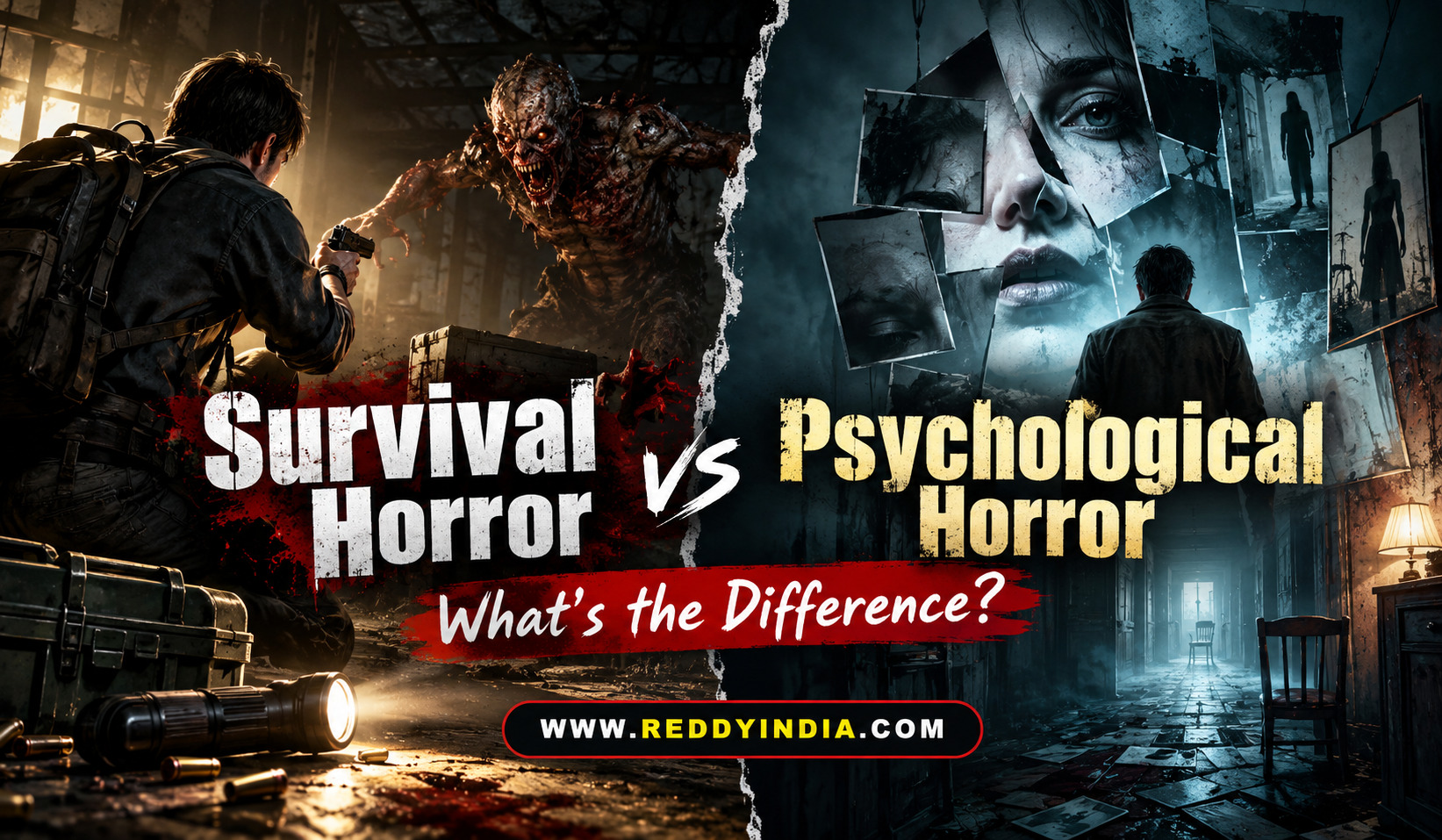
Survival Horror vs Psychological Horror: What’s the Difference?
Two horror games can both terrify you, yet one hands you a shotgun and the other takes your sanity. That gap sits at the heart of survival horror vs psychological horror, two styles that fans mix up all the time. Because the labels shape what you buy, knowing them saves money and sleep. This guide explains each style, compares them side by side, and suggests where to start.
Once you know the difference, picking games gets easier. For a ready-made shopping list, see the best horror games of all time for beginners and veterans. If you want to know why your heart pounds, read why horror games scare us and why we love them.
What Is Survival Horror?
Survival horror puts you in a fight you are not ready for. You usually have weapons, yet ammo and health are scarce. The key idea is resource management, so every choice carries weight. Fear grows as your supplies shrink.
Capcom helped define the style when Resident Evil arrived in 1996. Since then, the genre has grown with Dead Space, The Evil Within, and the Resident Evil remakes. Most of these games share a few traits that are easy to spot:
- Limited ammo and healing items
- Tight inventory space that forces hard choices
- Enemies that are dangerous but can be beaten
- Save points or checkpoints that add pressure
The style works because it turns every choice into a gamble. Should you fire at that shambling figure, or save the bullet for a worse one? Meanwhile, a nearly empty inventory makes each room feel risky. As a result, even a small win, like finding one healing herb, feels huge.
What Is Psychological Horror?
Psychological horror aims at your mind instead of your ammo count. The threat may be real, imagined, or both, and the game often will not say which. The key idea is fear of the unknown, because you start to doubt what you see. Tension builds slowly through mood, sound, and uncertainty.
Silent Hill 2 (2001) is a classic example, since its monsters reflect the guilt of the main character. Meanwhile, Amnesia: The Dark Descent uses a sanity meter to blur your screen. Games like Soma and Layers of Fear lean on strange ideas more than combat. Typical traits include:
- Little or no combat
- Unreliable reality and odd visuals
- Themes such as grief, guilt, and identity
- Slow pacing with heavy sound design
This style works because your own mind does the scary work. When a game hints at a monster instead of showing it, you picture something worse. Because the story often explores painful themes, the fear can feel personal. Many players keep thinking about these games for days afterward.
A Short History of Both Styles
The two styles grew from the same roots. Alone in the Dark arrived in 1992 and showed that fixed cameras and scarce items could create dread. Then Resident Evil in 1996 gave the genre its popular name and a huge audience. Three years later, Silent Hill shifted the focus toward fog, guilt, and mystery.
Over time, the split widened. Amnesia: The Dark Descent removed combat in 2010, and many indie developers followed. Meanwhile, the playable teaser P.T. in 2014 showed how a single hallway could scare millions. Today, big studios and small teams mix both styles freely.
Survival Horror vs Psychological Horror at a Glance
The table below sums up the main differences in one place. Fear source is the biggest split, since one style scares you with scarcity and the other with doubt.
| Feature | Survival Horror | Psychological Horror |
| Main fear source | Scarce resources and danger | Doubt, guilt, and the unknown |
| Combat | Present but limited | Rare or absent |
| Pacing | Tense bursts of action | Slow build with quiet stretches |
| Story | Often action driven | Often symbolic and personal |
| Classic example | Resident Evil (1996) | Silent Hill 2 (2001) |
Still, these lines are not walls. Many games borrow from both sides, and that is where things get fun. Think of the table as a rough map, not a rulebook.
How Sound and Design Shape Each Style
Sound does a lot of heavy lifting in both styles. In survival horror, audio cues act like warnings, such as a distant groan or the click of an empty gun. Because you can act on these clues, audio cues help you plan your next move.
Psychological horror uses sound differently. Long silences, whispers, and odd noises make you doubt the room around you. Meanwhile, lighting and camera angles bend your sense of space. As a result, even a plain hallway can feel threatening.
Where the Two Styles Overlap
Few games fit one box perfectly. Silent Hill, for instance, gives you a weapon and limited supplies, yet its story is deeply psychological. As a result, fans argue about which label fits best. Alien: Isolation also sits in the middle, since it mixes limited items with a growing sense of panic.
Dead Space is another case, because it is action based but wrapped in a gloomy mood. Meanwhile, The Evil Within blends dreamlike visuals with real combat. When a game does both well, the blend often feels fresher than either style alone.
Best Games for Each Style
Here are a few good starting points for each style. Check the store page for platforms and current prices before you buy.
| Game | Style | Developer | Year |
| Resident Evil | Survival horror | Capcom | 1996 |
| Dead Space | Survival horror | Visceral Games | 2008 |
| Silent Hill 2 | Psychological horror | Konami | 2001 |
| Amnesia: The Dark Descent | Psychological horror | Frictional Games | 2010 |
| Soma | Psychological horror | Frictional Games | 2015 |
| Alien: Isolation | Blend of both | Creative Assembly | 2014 |
Because many of these have modern remakes, newcomers can often find updated versions. For example, Dead Space and Silent Hill 2 both returned in 2023 and 2024. Remakes usually bring smoother controls, which helps if older games feel clunky to you.
Which Style Should You Try First?
If you like action and planning, survival horror is the safer start. You get tools to fight back, so the fear feels manageable. The Resident Evil series is a friendly pick, since its gunplay gives you a sense of control. Players who care more about story may want to lean the other way.
If you enjoy mood and mystery, psychological horror suits you better. Expect slower games, stranger ideas, and scares that linger after you turn off the screen. Of course, you can always try both. If you would rather share the fear, the list of best co-op horror games to play with friends has options for groups.
Common Mistakes When Picking a Horror Game
New players often assume all horror games rely on jump scares. In truth, many rely on dread, which creeps up slowly. Because of that, a quiet game can feel scarier than a loud one. Pick based on the kind of fear you enjoy.
Another mistake is skipping content warnings. Some titles include graphic violence or heavy themes, so a quick check helps. Also, avoid buying on a thumbnail alone. Watching a short gameplay clip tells you far more about pacing and tone.
Key Takeaways
- Survival horror: Fear comes from scarce ammo and health
- Psychological horror: Fear comes from doubt, guilt, and the unknown
- Classic survival pick: Resident Evil (1996)
- Classic psychological pick: Silent Hill 2 (2001)
- Blend example: Alien: Isolation (2014)
Frequently Asked Questions
What is the main difference between survival horror and psychological horror?
Survival horror scares you through limited resources, while psychological horror scares you through doubt and unsettling ideas.
Is Silent Hill survival horror or psychological horror?
Silent Hill mixes both, though many fans lean toward psychological horror because of its symbolic story.
Which style is better for beginners?
Survival horror is usually easier for beginners because you have weapons and clear goals.
Can one game be both survival horror and psychological horror?
Yes, and games like Alien: Isolation blend scarce resources with a strong psychological mood.
Conclusion
Survival horror vs psychological horror comes down to what scares you more: running out of bullets or losing your grip on reality. Survival horror tests your planning, while psychological horror tests your nerve. Pick the one that fits your mood tonight, and try the other one later.