Remember Me: Exploring Memory Technology in Gaming
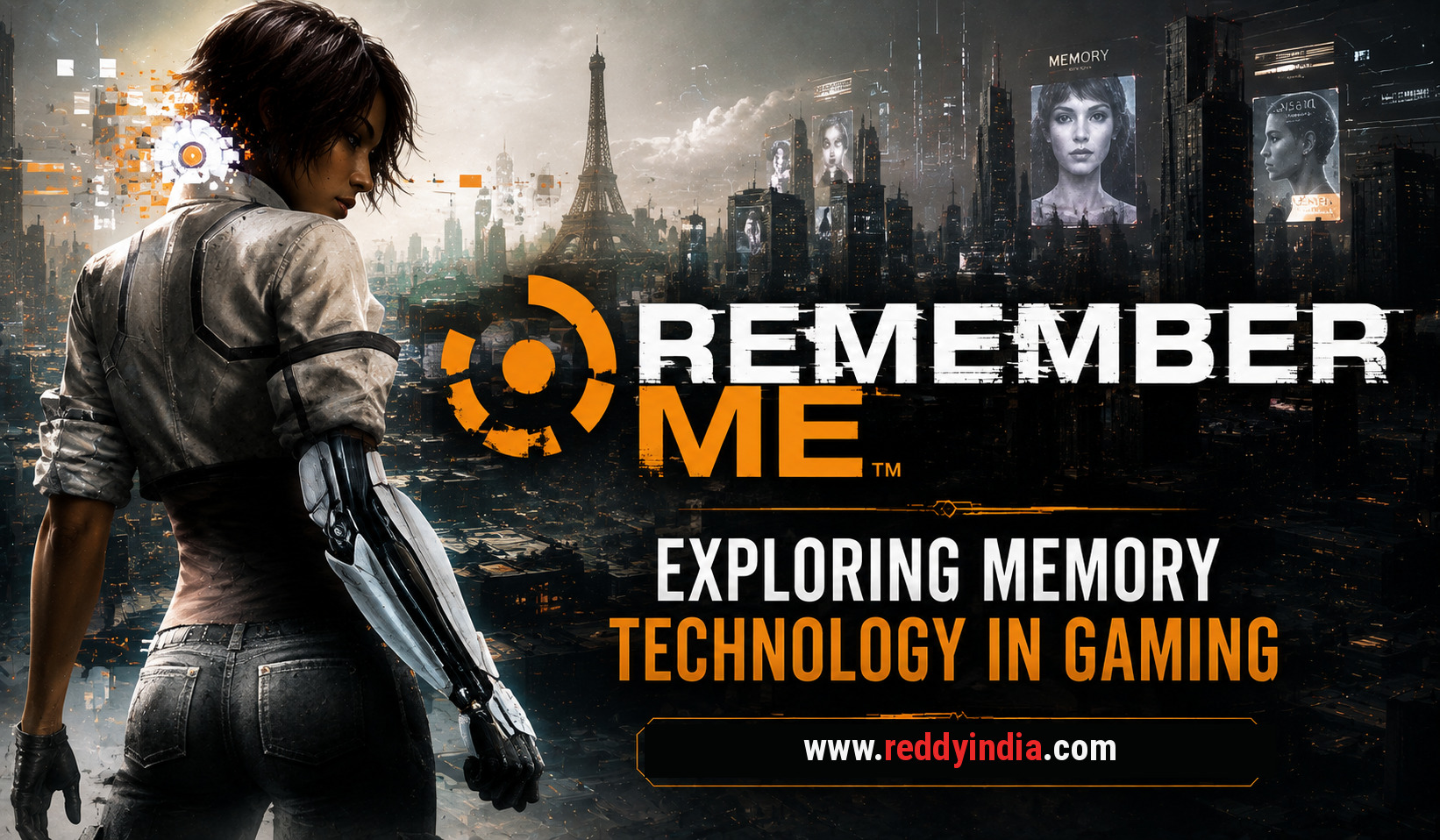
Video games have explored futuristic technology in countless ways, from artificial intelligence and robots to virtual reality and advanced cybernetics. Remember Me takes a different approach by focusing on something deeply personal: human memory. Developed by Dontnod Entertainment and published by Capcom, the game imagines a future where memories can be recorded, stored, shared, modified, and even stolen.
Set in a futuristic version of Neo-Paris in 2084, Remember Me combines science fiction, action, and narrative exploration to examine what could happen if technology gained direct access to human memories. Instead of treating memories as something private and untouchable, the game imagines them as digital information that can be manipulated like files on a computer.
This idea becomes the foundation of the game’s world, story, and gameplay.
A Future Where Memories Become Digital
Remember Me introduces a society in which memory technology has become part of everyday life. The central technology is called Sensen, a device implanted in people’s brains that allows memories to be stored and accessed digitally.
This changes society in fundamental ways.
People no longer have to rely entirely on their natural ability to remember experiences. Memories can be backed up, exchanged, and potentially modified.
The technology also creates a new form of digital economy. Instead of information existing only on computers or phones, personal experiences themselves can become data.
That creates enormous possibilities, but it also creates serious risks.
If memories can be edited, then a person’s understanding of their own past may no longer be completely reliable.
Neo-Paris and the Rise of Memorize
The world of Remember Me is dominated by a company called Memorize, which developed the Sensen technology.
The company promises to improve people’s lives by giving them greater control over their memories. However, its influence eventually extends far beyond simply providing a useful technological product.
Memorize becomes deeply connected to society.
This creates an important question about technology and corporate power. What happens when one organization controls a technology capable of changing how people remember their own lives?
The game suggests that control over information can become a powerful form of social influence.
In this world, memories are not simply personal experiences anymore. They have become valuable digital assets.
Nilin: A Memory Hunter
The protagonist, Nilin, is a memory hunter with the ability to enter people’s memories and manipulate them.
This ability gives the game’s central concept a direct gameplay connection.
Nilin does not simply learn about another person’s past by watching a cutscene. She can interact with memories and alter specific details.
This creates a unique relationship between story and gameplay.
The player is given access to something that would normally be impossible: changing another person’s recollection of an event.
That ability also raises ethical questions.
If changing someone’s memory changes their behavior, is that person still making completely independent decisions?
And if a painful memory can be removed, should it be?
Remember Me uses gameplay to make these questions feel more immediate.
Memory Remix: Turning Memories Into Gameplay
One of the game’s most distinctive features is the Memory Remix mechanic.
During certain sequences, Nilin enters a person’s memory and can manipulate events within it.
The player can rewind parts of the memory and alter specific details. A small change can lead to a completely different outcome.
This is an unusual idea because it turns memory into an interactive puzzle.
The player is not merely observing the past. They are experimenting with it.
A character may remember an event one way, but after Nilin changes a particular detail, the result can become completely different.
This demonstrates the game’s central theme: memories influence how people understand reality.
The Connection Between Memory and Identity
Remember Me repeatedly explores the relationship between memory and identity.
Human beings often understand themselves through their experiences. Childhood memories, relationships, achievements, failures, and painful events all contribute to a person’s sense of identity.
But what happens when those memories can be edited?
If someone forgets an important experience, does their personality change?
If a painful memory is replaced with something happier, are they still the same person?
Remember Me does not provide simple philosophical answers, but its world makes the questions unavoidable.
The technology effectively turns personal identity into something that can potentially be edited.
Memory as Data
One of the most interesting aspects of the game’s technology is the way it treats memory as digital information.
In modern computing, data can be copied, stored, transferred, deleted, and modified. Remember Me applies these concepts to human memories.
This creates a futuristic idea that feels surprisingly understandable.
A memory becomes something that can be accessed almost like a computer file.
The concept is obviously fictional, but it allows the game to explore what could happen if the most private part of human experience became technologically accessible.
It also highlights the difference between information and experience.
Even if a memory can be stored as data, does that mean the emotional meaning attached to it can truly be preserved?
The Dangers of Memory Manipulation
The technology in Remember Me offers obvious benefits, but it also creates significant dangers.
If memories can be altered without permission, people could be manipulated without realizing it.
A person’s beliefs could potentially be changed by modifying the experiences that shaped those beliefs.
This creates a form of control that is much more powerful than ordinary surveillance.
Instead of simply monitoring what people do, an organization could potentially influence why they behave that way.
The game uses this idea to create a dystopian atmosphere where personal freedom is closely connected to control over memory.
Technology and Social Inequality
Remember Me also shows that technological progress does not necessarily benefit everyone equally.
Neo-Paris contains different social groups, and access to memory technology contributes to divisions within society.
Advanced technology can improve people’s lives, but it can also create new forms of inequality when some groups have greater access, control, or influence.
This is a recurring issue in real-world technological development.
New technologies often create opportunities, but the benefits are not always distributed evenly.
Remember Me takes this familiar social issue and places it inside a futuristic world where the technology being controlled is something as fundamental as memory.
The Emotional Side of Technology
Despite its futuristic concept, Remember Me remains deeply interested in human emotion.
Memories are connected to love, fear, regret, happiness, and loss.
That is what makes memory technology so powerful within the game’s story.
If memories were nothing more than information, editing them would simply be a technical process. But because memories influence emotions and relationships, changing them can have profound consequences.
The game therefore uses technology to explore something that cannot easily be reduced to technology itself.
It asks whether human experiences can truly be treated like digital files.
A Unique Vision of the Future
Many cyberpunk games focus on artificial intelligence, cybernetic implants, or virtual reality. Remember Me takes the cyberpunk idea in a more personal direction.
Its future is built around the digitization of human experience.
Neo-Paris is filled with futuristic architecture, advanced devices, surveillance systems, and digital networks, but the most important technology exists inside people’s minds.
This creates a distinctive science-fiction setting.
The game suggests that the next major technological revolution might not simply change how humans communicate with machines. It could change how humans understand themselves.
Memory and Control
The game’s larger conflict is closely connected to control.
Who controls memories?
Who decides which experiences should be preserved?
Who has the right to modify someone’s past?
These questions give Remember Me a political and philosophical dimension.
The game’s technology creates a society where information is extremely valuable, but personal memories are perhaps the most valuable information of all.
The ability to control memory therefore becomes the ability to influence people.
Why Remember Me Remains Interesting
Remember Me stands out because its technology is closely connected to its central narrative idea.
Sensen is not just futuristic decoration. It influences the economy, society, characters, conflicts, and gameplay.
Memory Remix is not simply a special ability. It directly demonstrates the consequences of manipulating personal experiences.
This integration makes the technology feel meaningful.
Even though the game was released in 2013, its questions about digital privacy, data ownership, technological control, and personal identity remain relevant.
Final Thoughts
Remember Me offers one of gaming’s most distinctive visions of memory technology by imagining a future where human experiences can be digitally stored, accessed, and changed.
Through Nilin, players experience the possibilities and dangers of manipulating memories firsthand. The game explores how memory shapes identity, how technology can influence human behavior, and how corporate control over personal data can create powerful forms of manipulation.
Its futuristic Neo-Paris is therefore more than a stylish cyberpunk setting. It is a world built around a fascinating question: if technology could change your memories, could it also change who you are?
That question gives Remember Me lasting relevance. Its technology may belong to science fiction, but its concerns about privacy, identity, control, and the growing relationship between humans and technology are surprisingly close to conversations happening in the real world.
By turning memory into a technological resource and a gameplay mechanic, Remember Me demonstrates how science-fiction games can use technology not merely to create futuristic worlds, but to explore fundamental questions about what makes us human.