The Invincible: Exploring AI and Futuristic Exploration
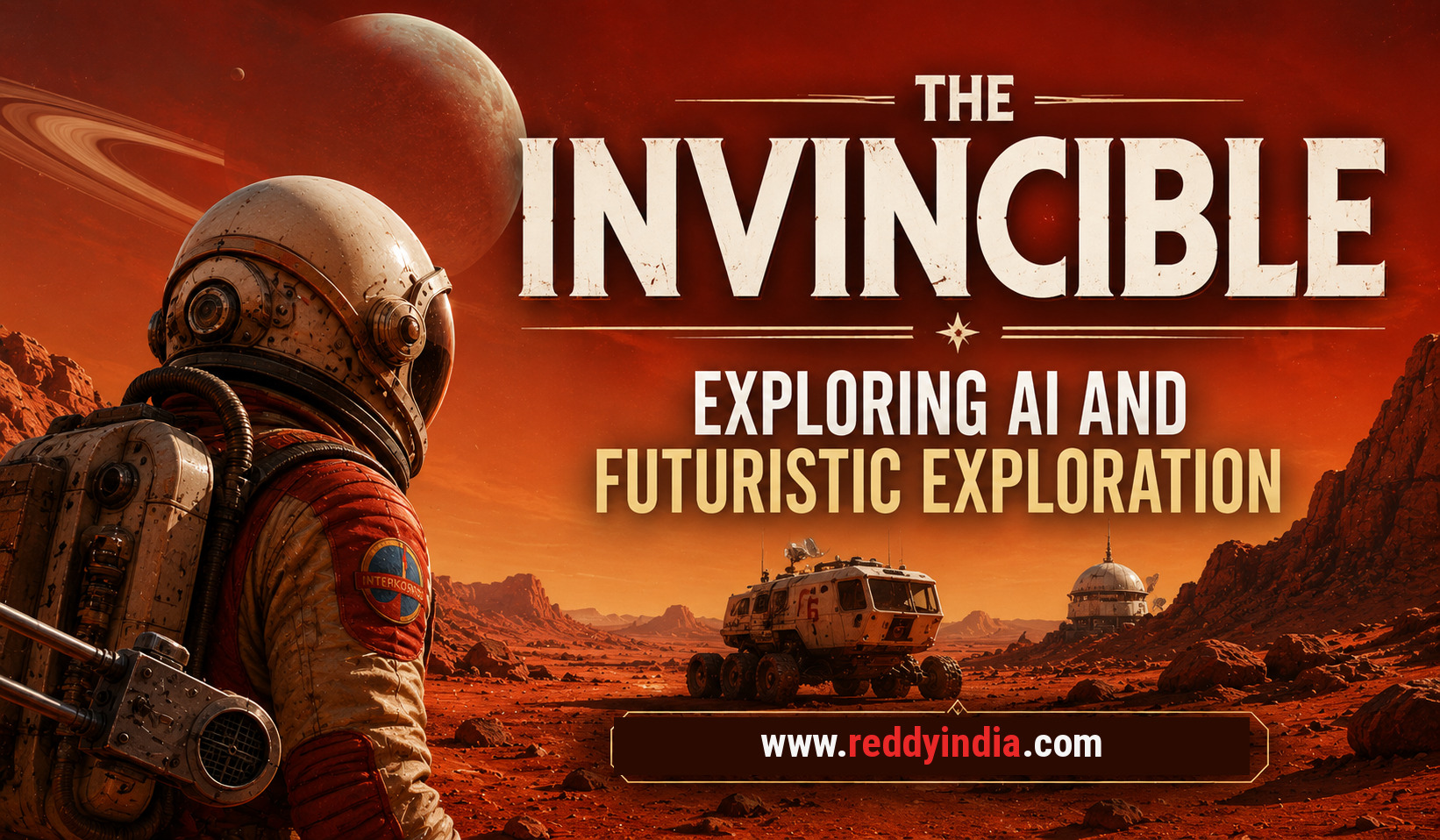
Science fiction has always imagined a future where technology can take humanity beyond the limits of Earth. Games take that idea a step further by allowing players to experience unfamiliar worlds directly. The Invincible is a strong example of this approach, combining futuristic exploration, advanced technology, artificial intelligence, and philosophical questions into a narrative-driven adventure.
Developed by Starward Industries and inspired by the science-fiction novel The Invincible by Stanisław Lem, the game takes players to Regis III, a mysterious alien planet filled with unexplained phenomena and technological dangers. Instead of focusing primarily on fast-paced combat, the game emphasizes exploration, investigation, atmosphere, and difficult decisions.
Technology is central to this experience. From futuristic communication systems and scientific instruments to autonomous machines and intelligent technologies, the game presents a future where exploration depends heavily on machines while humans remain responsible for understanding what they encounter.
A Futuristic Journey to Regis III
The story follows Yasna, a space scientist who becomes involved in a dangerous mission on the remote planet Regis III. After losing contact with members of her expedition, she begins searching for them across an unfamiliar and hostile environment.
Regis III immediately establishes the game’s futuristic identity. The planet is not presented as a conventional open-world playground filled with endless activities. Instead, it feels isolated, mysterious, and unpredictable.
Players explore strange landscapes while using technological equipment to investigate their surroundings. Every discovery creates new questions about the planet, the missing crew, and the limits of human knowledge.
This makes exploration more than simply moving from one location to another. It becomes a process of scientific investigation.
Technology as a Tool for Exploration
In The Invincible, technology exists primarily to help humans understand an environment they cannot fully comprehend.
Yasna has access to various futuristic tools that allow her to communicate, collect information, detect objects, and investigate unusual situations. These devices give players a sense of how future explorers might operate on distant planets.
The technology does not remove the danger of exploration. Instead, it provides limited information that players must interpret.
This is an important difference from many futuristic games where advanced technology gives characters almost complete control over their surroundings. In The Invincible, technology has boundaries.
Sensors can provide information, but they cannot always explain what that information means. Communication systems can connect people, but communication can still fail. Machines can perform tasks, but they cannot completely eliminate uncertainty.
Artificial Intelligence and Automation
Artificial intelligence is another important element of the game’s futuristic world.
The Invincible presents a future in which humans rely on sophisticated technological systems to operate in challenging environments. Automated machines and intelligent systems can support exploration, research, transportation, and survival.
However, the game does not present technology as an all-powerful solution.
Instead, AI and automation exist alongside human judgment.
This creates an interesting question: when humans explore environments that are too dangerous or unfamiliar for direct investigation, how much responsibility should be given to machines?
A machine may be capable of collecting information faster than a human, but interpreting that information can require context, experience, and intuition.
The Invincible uses this relationship between humans and technology to reinforce one of its central ideas: advanced tools can expand human capabilities, but they do not necessarily expand human understanding at the same rate.
The Mystery of an Alien World
Regis III is perhaps the most important technological challenge in the game because it represents something humans do not understand.
The planet contains strange geological structures, unexplained phenomena, and remnants of technology that raise questions about an unknown civilization.
As players explore, they gradually discover that Regis III cannot be understood simply through conventional scientific assumptions.
This creates an interesting contrast.
Human technology is highly advanced, yet the planet remains mysterious.
The contrast gives the game its distinctive atmosphere. Players are constantly reminded that technological progress does not mean humanity has discovered everything.
There can still be places where even sophisticated machines struggle to provide clear answers.
Futuristic Machines and the Feeling of Isolation
Machines play an important role in creating the atmosphere of The Invincible.
Instead of making the future look sleek and perfectly automated, the game often presents technology as functional and industrial. Equipment appears designed for survival, research, communication, and transportation rather than entertainment.
This makes the world feel more believable.
The machines are tools built for a specific purpose, and their presence reinforces the idea that Yasna is part of a scientific expedition rather than a conventional space adventure.
At the same time, the technology highlights her isolation.
A radio can connect her to other people, but it cannot replace their physical presence. A vehicle can transport her across the planet, but it cannot guarantee safety. Scientific instruments can provide data, but they cannot eliminate fear.
Technology therefore becomes part of the emotional experience.
Technology Versus Human Judgment
One of the most interesting themes in The Invincible is the relationship between technological capability and human decision-making.
Players frequently face situations where they must decide what to investigate, how to respond, and whom to trust.
Technology can provide information, but the player ultimately has to make decisions.
This reflects an important real-world question about artificial intelligence. Modern AI systems can process enormous amounts of information, but human beings still need to determine how that information should influence important choices.
The game takes this idea into a science-fiction environment where the consequences can be far more dramatic.
A Different Approach to Science Fiction
The Invincible stands apart from many futuristic games because it does not depend entirely on spectacle.
Its science-fiction experience is built around atmosphere and ideas.
There are moments of tension and danger, but the game is primarily interested in exploration and discovery. Players are encouraged to observe their surroundings, listen carefully, analyze information, and think about the consequences of their choices.
This slower approach makes the technological elements more meaningful.
A strange machine is not simply something to destroy or collect. It can become a clue.
A communication device is not merely a gameplay mechanic. It can become a connection to another person.
A scientific instrument is not just equipment. It represents humanity’s attempt to understand something beyond its experience.
The Limits of Human Knowledge
Perhaps the most powerful idea behind The Invincible is that technological progress does not guarantee complete knowledge.
Humanity may develop sophisticated spacecraft, AI systems, communication networks, and scientific instruments, but there will always be questions that technology cannot immediately answer.
Regis III represents this uncertainty.
The planet challenges the assumption that humans can understand everything if they simply develop better tools.
That idea gives the game a philosophical dimension. It asks players to consider whether exploration should always be driven by curiosity and ambition, or whether there are situations where humans should accept that some mysteries are better left alone.
How Technology Supports Interactive Storytelling
The game’s technology also supports its storytelling structure.
Instead of delivering the entire narrative through traditional cutscenes, The Invincible uses exploration, conversations, environmental details, and technological discoveries to reveal information.
Players gradually build an understanding of what happened on Regis III.
This approach makes the mystery feel personal because the player is participating in the investigation.
The technology becomes part of the narrative language. Communication systems deliver important conversations, scientific equipment provides clues, and futuristic vehicles allow access to different areas of the planet.
Everything works together to make exploration feel connected to the story.
Why The Invincible Is Interesting for Technology Fans
For players interested in AI, space exploration, robotics, and futuristic technology, The Invincible offers more than a visually impressive science-fiction setting.
It explores how technology could shape humanity’s relationship with distant worlds.
The game also avoids presenting AI and machines as simple heroes or villains. Instead, technology is treated as something powerful but imperfect.
That perspective makes the world feel more grounded.
The future shown in The Invincible is not one where machines have solved every problem. It is a future where humans have developed incredible tools but still face uncertainty, fear, ambition, and difficult choices.
Final Thoughts
The Invincible uses AI, futuristic machines, scientific equipment, and advanced communication systems to create a compelling vision of space exploration. Yet its most interesting message is that technology does not automatically make the unknown less mysterious.
Regis III demonstrates the limits of human understanding, while Yasna’s journey shows the importance of curiosity, judgment, and personal responsibility.
By combining futuristic technology with atmospheric exploration and philosophical storytelling, The Invincible creates a distinctive science-fiction experience. It reminds players that the greatest challenge of exploring the future may not be reaching distant planets—it may be understanding what we discover when we finally get there.