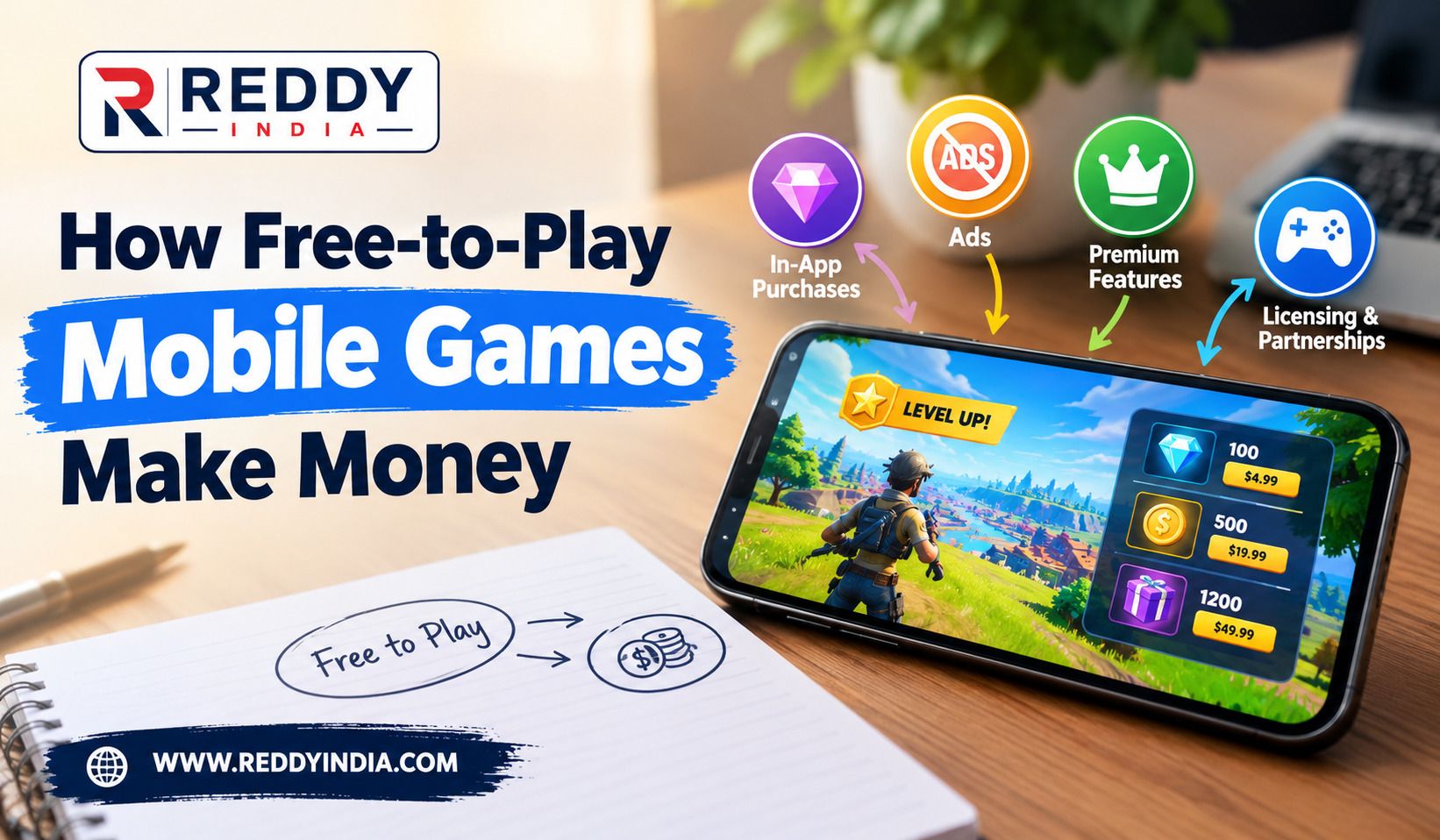
How Free-to-Play Mobile Games Make Money: Ads, Purchases, and More
You paid nothing to install that game, so someone else is covering the bill. Usually, that someone is a mix of advertisers and a small group of players who spend real money. Once you see how free-to-play mobile games make money, the tricks become easier to spot. Because of that, your wallet stays safer too.
Since the topic touches almost every phone, this guide keeps things simple. First, you will see how purchases, random rewards, ads, and seasonal passes work. After that, we look at who pays, why players return, and how to set healthy limits.
The Free-to-Play Idea in Plain Words
A free-to-play game costs nothing to download. Even so, the studio still pays artists, coders, server bills, and marketing teams. Because of this, the developer needs another way to earn money once you open the app. That single problem sits at the center of how free-to-play mobile games make money.
Paid games ask for money first, and then you own the whole thing. Free games, on the other hand, flip that order. In this model, revenue comes after the install, not before it, so the extras are what you buy later. Some extras save time, while others add cosmetic looks or remove annoying waits.
| Model | How It Works | Typical Player Cost | Common Game Types |
| In-app purchases | Buy items with real money | Optional | Strategy, puzzle, role-playing |
| Gacha | Spend currency for random rewards | Optional | Hero collector games |
| Ads | Watch or see sponsored clips | Free | Casual and hyper-casual |
| Battle pass | Pay for a season of rewards | Optional | Shooters, battle royale |
| Subscription | Pay monthly for daily perks | Recurring | Many genres |
In-App Purchases
An in-app purchase is real money spent inside a game on virtual goods. For instance, you might buy gems, coins, character skins, or faster build timers. Most games sell these through the Google Play Store or the Apple App Store. Because both stores take a cut, the developer keeps only part of each sale.
Many games also use two kinds of money. Soft currency is earned by playing, while premium currency is usually bought or handed out very slowly. Since premium currency hides the real price of items, players often lose track of what they spend. In many cases, that is on purpose.
Developers love the starter pack as well. It is a cheap, one-time bundle shown early, when excitement is highest. Once someone makes a first small purchase, the next one feels much easier. Energy refills, extra lives, and one-time ad removal are other common sellers.
Gacha and Random Rewards
Gacha is a system where you spend currency for a random reward. The name comes from Japanese capsule toy machines. When you pull, you see what drops, and sometimes it is a rare character. Other times, you get something you already own.
Each pull has a chance attached to it, so these drop rates decide how often rare items appear. Top-tier characters usually have very low odds. Although some games add a pity system that guarantees a rare reward after a set number of pulls, rules differ by game. Because of that, always read the odds screen.
Loot boxes work in a similar way, since the contents stay hidden until you open them. Even so, some countries have started to look closely at them. For players, the main risk is simple. Small pulls add up quickly, so the chase for one character can drain a budget.
How Free-to-Play Mobile Games Make Money From Ads
Ads are the second big income stream, and they pay off even when players never spend a cent. A developer earns money when an ad network shows a sponsored clip in the game. Sometimes the payment depends on views, while other times it depends on taps or installs. Either way, a huge free audience has real value.
Rewarded ads are the friendliest type, since you choose to watch them. In a rewarded video ad, you trade a short stretch of attention for a bonus, like an extra life. Other types are less welcome, though. Forced clips between levels can break the flow, which is why many games sell an ad-free upgrade.
| Ad Type | What You See | Player Experience |
| Rewarded video | A short clip you choose to watch | Friendly, gives a bonus |
| Interstitial | A full-screen ad between levels | Can feel annoying |
| Banner | A small strip at the screen edge | Easy to ignore |
Hyper-casual games, which are very simple tap-and-play titles, depend on ads the most. In contrast, big role-playing games lean more on purchases. Because many studios mix both, a player can earn rewards through ads or skip them by paying.
Battle Passes and Subscriptions
A battle pass is a season-long track of rewards that unlock as you play. Most have a free track and a paid track. As you finish daily and weekly missions, you climb the seasonal reward track and collect skins, currency, or characters. Of course, the paid version simply adds better prizes at each step.
Why do passes work so well? For one thing, the price feels fair, since you can see every reward in advance. On top of that, the season ends on a set date, which creates fear of missing out, or FOMO. As a result, players log in daily so their pass money does not go to waste.
Subscriptions follow a simpler path. You pay a monthly fee, and in return the game gives you daily gems, a bigger energy bar, or an ad-free experience. Although each payment looks small, the income repeats every month. Because of this, studios like subscriptions, since they make earnings easier to predict.
Who Actually Pays
When we look at how free-to-play mobile games make money, a small group of players brings in most of it. Gamers call the biggest spenders whales, a term borrowed from casino talk. Meanwhile, mid-level spenders are sometimes called dolphins, and tiny spenders are minnows. Everyone else plays for free, and that group is by far the largest.
Free players still matter a great deal, though. For one thing, they fill matches, chat with others, and make the game feel alive. Beyond that, they watch ads, which pay the studio even when no purchase happens. Without them, a multiplayer game would quickly feel empty.
There is a darker side here too. Some big spenders pay more than they can afford. For that reason, honest studios offer spending limits, and many players now push for clearer odds and fair rules.
Keeping Players Around
Getting a download is only the first step. The harder job is retention, which means how many players return day after day. Since a game that loses people in the first week earns very little, designers pour effort into the first few days of play. Because of this, early rewards come fast, and that habit shapes how free-to-play mobile games make money later.
Here are common tools used to bring players back:
- Daily login rewards that grow with each day in a row
- Energy timers that refill while you are away
- Limited-time events with exclusive prizes
- Guilds and friend lists that make you feel responsible to others
- Push notifications that say a reward is ready
Studios also run A/B tests, which means showing two versions of a screen to different groups. Whichever version earns more money or keeps more players wins. That is why store layouts and prices sometimes change without warning.
Spending Wisely as a Player
Knowing how free-to-play mobile games make money makes spending easier to control, and it is fine when you choose it on purpose. Trouble starts, however, when small buys pile up unnoticed. A few simple habits can help you stay in charge while you still enjoy the game.
- Set a monthly spending limit before you start, and write it down.
- Wait 24 hours before buying anything, since the urge often fades.
- Check the drop rates before pulling for a random reward.
- Turn on purchase passwords in your phone settings.
- Review your active subscriptions every month and cancel the ones you ignore.
Parents should also use the built-in family controls on both phone stores. Since kids can tap buy buttons without understanding the cost, a password or approval step is a smart safety net.
Key Takeaways
- Main idea: Games are free to install, but revenue arrives later through extras and ads.
- Top income sources: In-app purchases, random rewards, advertising, battle passes, and subscriptions.
- Biggest spenders: A small group of players, often called whales, bring in much of the money.
- Free players: They still help through ads, matches, and a lively community.
- Smart habit: Set a monthly limit and check drop rates before any random pull.
Frequently Asked Questions
How do free-to-play mobile games make money without charging for downloads?
They earn through in-app purchases, advertising, battle passes, and subscriptions that players choose to buy after installing.
What is a whale in mobile gaming?
A whale is a player who spends a very large amount of real money inside a free game.
Are rewarded video ads safe to watch?
They are generally safe when they come through the official game, but you should avoid tapping unknown links.
What is a gacha system?
It lets players spend currency for a random reward, with a set chance for each item.
How can I control spending in free games?
You can set a monthly limit, turn on purchase passwords, and check your subscriptions regularly.
Conclusion
Now you know how free-to-play mobile games make money, and the picture is less mysterious than it first seems. Studios earn through purchases, random rewards, ads, passes, and subscriptions, all built on a huge free audience. Meanwhile, the biggest spenders keep the lights on for everyone else. So if you remember one thing, enjoy the game, know the system, and keep your spending on your own terms.