Turn-Based vs Real-Time Strategy: Which Style Suits You?
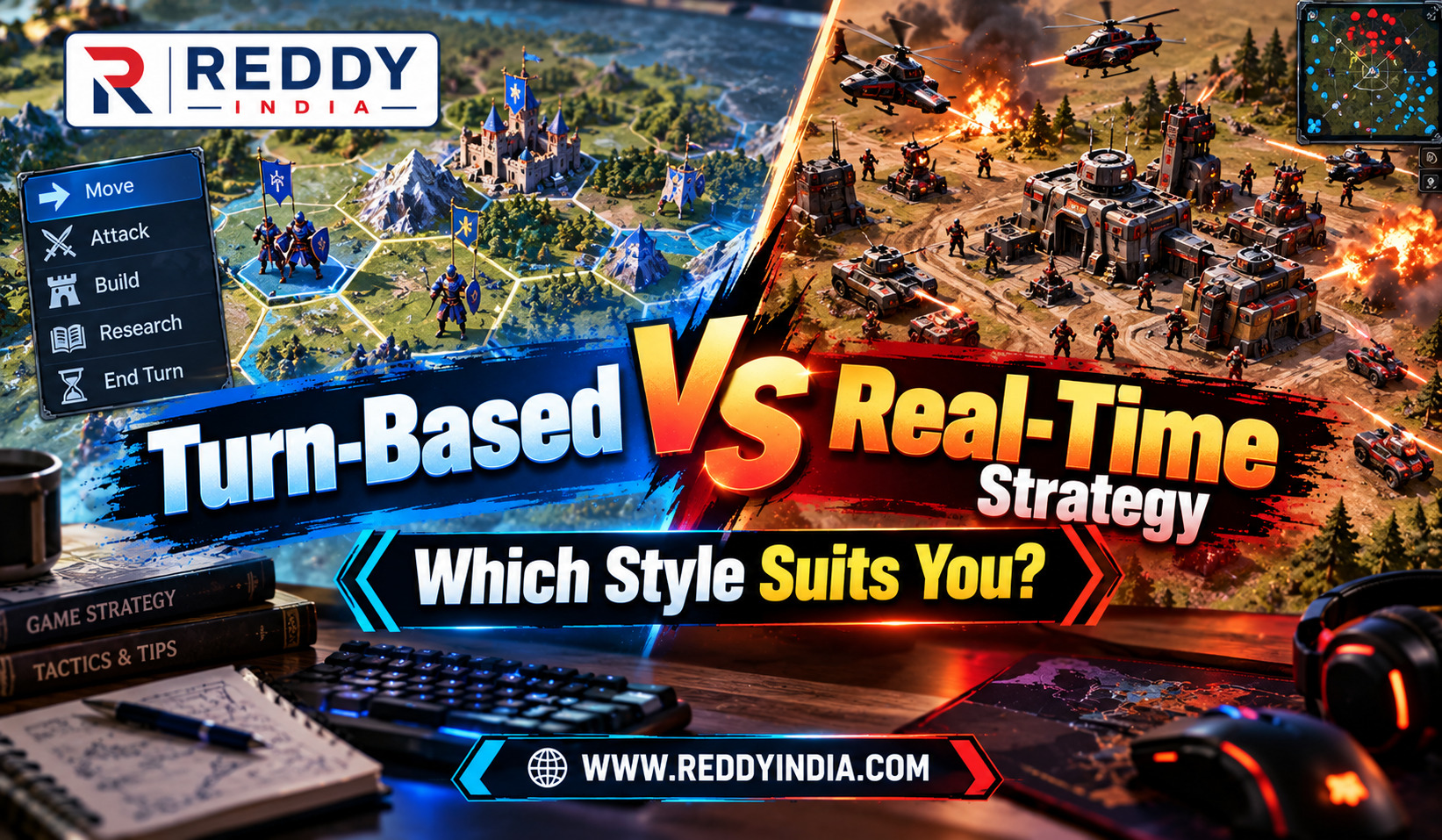
Would you rather think for ten minutes or react in ten seconds? Because of that one question, turn-based vs real-time strategy splits players into two camps. Both styles ask you to build armies and manage resources, yet they feel very different in your hands. So this guide explains each style in plain words, compares them side by side, and helps you pick one.
If you want a wider picture, the biggest gaming trends of 2026 are a good place to look. So for now, the focus stays on the two big strategy styles. Because your choice affects your stress level and your free time, it deserves a careful look.
What Is Turn-Based Strategy?
In turn-based strategy, you make your moves while the game waits. Then the enemy moves, and the cycle repeats. Because time stops during your turn, you can think as long as you want. Because of that, you get time to think, which is the main appeal of the style. Mistakes also cost less, since you can rethink a plan before you click.
Since it first arrived in 1991 from MicroProse, Civilization has been a famous example. Meanwhile, XCOM: Enemy Unknown, from Firaxis in 2012, uses small squads and risky shots. Then there is the Fire Emblem series from Nintendo, which mixes turn-based battles with a story about growing characters. Even RPGs borrow the idea, as Baldur’s Gate 3 shows in the best RPGs of all time across every platform. Since nothing rushes you, these games suit relaxed evenings. Because each turn is a small puzzle, you also feel clear progress as the map changes.
What Is Real-Time Strategy?
While turn-based games wait for you, real-time strategy (RTS) never pauses. Both sides give orders at the same time, so speed matters. You build a base, gather resources, and train units while the enemy does the same. If you wait too long, your rival may attack before you are ready.
Since speed matters, fans measure it in actions per minute (APM), which counts commands given each minute. Still, two skills matter most. Macro means managing your economy and base, while micro means controlling single units in battle. In short, fast decision making wins matches. Another idea is fog of war, which hides parts of the map until your units explore them. Because of that, scouting becomes a key habit, since you must guess what the enemy is building.
As examples, Age of Empires, from Ensemble Studios in 1997, and StarCraft, from Blizzard in 1998, are classics. Meanwhile, Command & Conquer, from Westwood Studios in 1995, helped make the style popular. Because these games set the rules for the genre, many newer titles still copy their ideas.
Turn-Based vs Real-Time Strategy: Key Differences
As the table below shows, the two styles differ on the points that matter most.
| Feature | Turn-Based | Real-Time |
| Pace | Slow and steady | Fast and constant |
| Thinking time | Unlimited on your turn | Very limited |
| Main skill | Planning and tactics | Speed and multitasking |
| Stress level | Low to medium | Medium to high |
| Pausing | Easy, since the game waits | Hard in online matches |
Because of these gaps, the same player can love one style and quit the other. Because of the fast pace, a careful planner may feel lost in an RTS match. On the other hand, a quick-fingered player may find turn-based games too slow. Neither style is better, so the real question is what you enjoy.
Learning curve also differs. Because turn-based games let you pause and think, you can learn the rules slowly. By contrast, real-time games throw you in at once, so practice matters more.
Famous Examples of Each Style
| Game | Style | Developer | Year |
| Civilization | Turn-based | MicroProse | 1991 |
| XCOM: Enemy Unknown | Turn-based | Firaxis | 2012 |
| Age of Empires | Real-time | Ensemble Studios | 1997 |
| StarCraft | Real-time | Blizzard | 1998 |
These four games work well as starting points, since each one defined its style for many players. Because each has sequels or newer versions, you can also follow the style as it grows. While you compare them, remember that fresh releases keep appearing. If you want fresh titles to try, the most anticipated games for the rest of 2026 is worth a look.
Strengths and Weaknesses of Each Style
Turn-Based Pros and Cons
- Strength: You can think through every option, so smart plans get rewarded. Because the game waits, you can also stop for a snack without losing.
- Strength: The rules are easier to learn, since you see each result before you move on. As a result, the style is friendly to new players.
- Weakness: Long turns can slow the game down, so waiting for the enemy may feel dull in big games.
- Weakness: Because nothing rushes you, some fights feel less exciting. As a result, fans of fast action may lose interest.
Real-Time Pros and Cons
- Strength: Because the action never stops, your attention stays locked in. Since matches move quickly, wins feel thrilling.
- Strength: Skill grows in clear steps as you learn build orders, which are planned lists of buildings and units.
- Weakness: Since matches run live, the pace can feel stressful, especially online. So beginners may feel lost at first.
- Weakness: You must juggle many tasks at once. Because of that, one small mistake can snowball.
Tips for Trying Each Style
- For turn-based games, start on an easy difficulty so each turn feels manageable.
- For real-time games, try the campaign first, because it teaches the controls at a gentle pace.
- Learn hotkeys (keyboard shortcuts) early, since they save time in real-time matches.
- In turn-based games, check the enemy range before you move.
- Play a few casual matches before you try online ranked play.
- Watch a few videos of expert play, because they show how veterans plan each move.
- Stop when you feel tired, because strategy games reward a clear head.
Which Style Suits You?
Choose Turn-Based If You Like Careful Planning
If you enjoy puzzles, long-term goals, and thinking through every option, this style fits. Fans of board games and chess often feel at home here. Because the game waits, mistakes feel like lessons instead of disasters. This style also fits players with busy lives, since you can stop at any time.
Choose Real-Time If You Like Speed and Pressure
If you enjoy quick reactions and juggling many tasks, this style fits. Players who like competitive matches often prefer it, since the pace rewards practice. Because every second counts, matches feel exciting and tense. Players who like fast reflexes may also enjoy why souls-like games are so challenging, since both reward sharp timing.
Think About Your Free Time
Short sessions favor turn-based games, as you can save and leave anytime. Meanwhile, real-time matches often run until someone wins, so you need a free block of time.
Can You Enjoy Both?
Yes, and many players do, since the two styles teach different skills. Some start with turn-based games to learn core ideas, then move to RTS once they feel confident. Others jump between the two when their mood changes.
Because the styles are so different, a few games even blend both. The Total War series, for instance, uses a turn-based campaign map and real-time battles. That means you get a taste of each approach in one game.
Key Takeaways
- Turn-based: The game waits while you plan, so it suits calm thinkers.
- Real-time: The action never stops, so it suits fast decision makers.
- Beginner pick: Turn-based games are usually easier, because you set the pace.
- Time needed: Turn-based games pause easily, while RTS matches need longer blocks.
- Best of both: The Total War series mixes the two styles.
Frequently Asked Questions
What is the main difference between turn-based and real-time strategy?
Turn-based games pause while you plan, while real-time games keep running.
Which style is easier for beginners?
Turn-based strategy is usually easier because you can take as much time as you need.
Is StarCraft turn-based or real-time?
Since it runs without pauses, StarCraft is a real-time strategy game from Blizzard.
Can I play strategy games on a weak PC?
Many older strategy games run well on modest hardware, but always check the system requirements on the store page.
Do any games use both styles?
Yes, since the Total War series mixes a turn-based campaign map with real-time battles.
Conclusion
Because every player thinks differently, turn-based vs real-time strategy comes down to personal taste. If you enjoy calm planning, turn-based games give you all the time you need. If you enjoy speed and pressure, real-time games will keep your heart racing. Whichever style you pick, a good strategy game still rewards smart choices. Because both styles reward practice, your first few matches are only the start.