Games with Multiple Endings: Does Your Choice Really Matter?
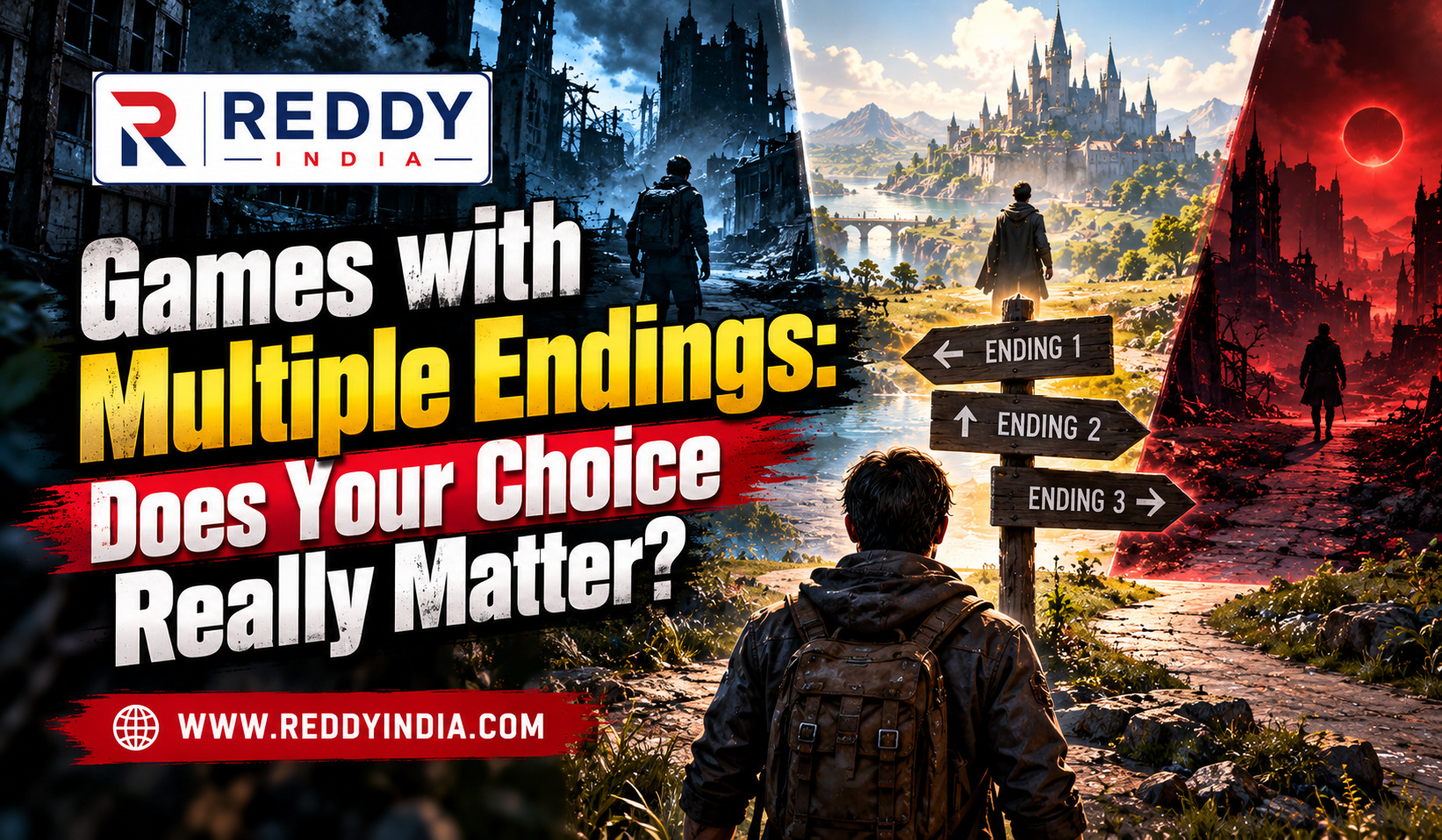
You spend forty hours making choices, yet the ending might ignore half of them. That tension sits at the center of games with multiple endings. Some titles treat your decisions with care, while others hand you a color-coded menu at the finish line. This post checks how well several well-known games answer one big question: does your choice really matter? We cover Undertale, Fallout: New Vegas, Baldur’s Gate 3, Mass Effect 3, and Detroit: Become Human.
Spoiler warning: this post discusses ending types and some story outcomes. Skip a game section if you plan to play it blind.
What Counts as Multiple Endings
A game has multiple endings when your actions lead to different final scenes. Some games change only a short cutscene. Others change who lives, who rules, and what the world looks like afterward.
Because the word multiple hides these differences, it helps to sort endings into two groups. Endings built from many small choices tend to feel earned. Endings picked from a menu at the last minute often feel like a final exam. Keep that split in mind as you read on.
Why Developers Build Multiple Endings
Multiple endings give players a reason to replay. They also let a story reflect how each person plays. For developers, though, the work is large. Every new branch needs writing, art, and testing. Because of that cost, many studios choose a few big endings instead of dozens of small ones.
Players also enjoy sharing results. Friends compare what they chose, and the talk keeps a game alive for years. That said, a branch only helps if it feels fair. If a choice seems to matter and then does not, trust drops fast. So the best games show you the outcome.
Endings That Truly Change the Story
Some games build the whole journey around your decisions. In these cases, the ending is a mirror of how you played, and that makes a second run worth the time.
Undertale
Toby Fox released Undertale on September 15, 2015, and the game tracks how you treat every enemy. You can spare monsters or defeat them, and the world answers. Fans call the three main paths Neutral, True Pacifist, and Genocide. Each one leads to very different final scenes. Even stranger, the game remembers events from earlier saves, which makes it feel personal.
A kind run asks for patience, because you must find peaceful answers to each fight. A cruel run asks for the opposite, and the game comments on it. Because the story reacts to your tone, the choice feels personal rather than mechanical.
Fallout: New Vegas
Obsidian released Fallout: New Vegas on October 19, 2010. The story builds toward a large battle at Hoover Dam. You can back the NCR, Caesar’s Legion, or Mr. House, or you can take the independent path with help from Yes Man. Each route changes who runs the region. After that, the ending slides describe how your choices affected towns and characters you met along the way.
The best part is the freedom to disagree with every side. Even the most helpful faction has flaws, so no route is clean. As a result, players argue over which path is best, and nobody wins that debate.
Baldur’s Gate 3
Larian Studios launched Baldur’s Gate 3 on PC on August 3, 2023. Your party members have their own goals, and your decisions can change their fates. Some characters may leave, or even turn against you. As a result, no two final battles feel exactly alike. Not every choice rewrites the end, but many leave visible marks. If you love strong companions, the same care shows up in the best game storylines of all time.
Because the game is long, early decisions can echo hours later. A small act of kindness may return as help in a hard fight. That kind of echo is rare, and it makes the world feel awake.
Endings That Feel Like a Color Swap
Other games give you big choices, then squeeze them into a few finish lines. That can leave players asking why they bothered.
Mass Effect 3
BioWare released Mass Effect 3 on March 6, 2012. Players had spent three games making choices. Then the finale offered three main options, each tied to a color. Many fans felt the results looked too similar, no matter what they did earlier. BioWare answered with a free Extended Cut in June 2012 that added more scenes and detail. Even so, the debate continues today.
Detroit: Become Human
Quantic Dream released Detroit: Become Human on PS4 on May 25, 2018. After each chapter, a flowchart shows every branch you saw and every one you missed. That proves how many paths exist. However, some branches rejoin the main road later. Because of that, choices can feel huge in the moment and smaller afterward. The game reached PC in December 2019.
Games with Multiple Endings at a Glance
| Game | Release date | Platforms | Ending style | Our verdict |
| Undertale | September 15, 2015 | PC and consoles | Three main routes | Choice matters |
| Fallout: New Vegas | October 19, 2010 | PC, PS3, Xbox 360 | Faction based | Choice matters |
| Baldur’s Gate 3 | August 3, 2023 | PC and consoles | Many small outcomes | Choice matters |
| Mass Effect 3 | March 6, 2012 | PC and consoles | Three main finales | Mixed |
| Detroit: Become Human | May 25, 2018 | PS4, PC | Branching chapters | Mixed |
The verdict column is a fan opinion, not a fact. Your own view may differ, and that is part of the fun.
How to Judge If a Choice Matters
Not every choice deserves the same weight. Use these questions to test a game before you spend a second playthrough on it.
- Does it change gameplay? A choice that alters quests, allies, or tools feels real.
- Does it change a character’s fate? Lives saved or lost raise the stakes.
- Does the game remember it later? Callbacks make a decision feel alive.
- Does it shape the final scene? If not, the ending may be decoration.
Strong endings also depend on a strong final opponent, and the best video game villains show how much a last fight can add. Meanwhile, a surprise at the end can change how every earlier choice looks. Several of the biggest plot twists in games work that way. In short, choice matters most when the game keeps track of it.
The Cost of Too Many Branches
More endings do not always mean more depth. A game can offer ten finales and still feel flat if each one reads the same. In contrast, a game with only two endings can feel rich if the road to them is varied.
Quality matters more than count. Players tend to remember how an ending felt, not how many existed. So when you pick your next game, ask how the story reacts along the way, not just at the end.
Key Takeaways About Games with Multiple Endings
- Best for mercy and violence routes: Undertale
- Best for faction consequences: Fallout: New Vegas
- Best for companion fates: Baldur’s Gate 3
- Most debated ending: Mass Effect 3
- Best branch map: Detroit: Become Human
- Quick test: a choice matters when it changes more than the last cutscene
Frequently Asked Questions
Do multiple endings make a game better?
They can add replay value, but only when each ending feels earned.
Which game has the most endings?
Counts vary by fan, but Baldur’s Gate 3 offers many possible outcome combinations.
Is it worth replaying for other endings?
Yes, if the game changes scenes and characters, but less so if only the final cutscene changes.
Which ending caused the most debate?
The Mass Effect 3 finale is often named, which led to the free Extended Cut.
Should I use a guide for the best ending?
Play naturally on the first run, then use a guide on a second run if you want to see other paths.
Conclusion
Games with multiple endings can reward careful play, or they can hide the same finish behind different colors. Undertale, Fallout: New Vegas, and Baldur’s Gate 3 show the best side of choice, while Mass Effect 3 and Detroit show its limits. So, does your choice really matter? Sometimes it does, and the best games make sure you can see the proof.